


Two Easy Ways to Start Earning Rewards!
Become a member today! Members-only pricing and offers, personalized care notifications, Vital Care points back on every purchase and more!
 Become a credit card member today!
Earn 2X Pals Rewards points at Petco
when you use Petco Pay!APPLY NOWLearn More About Petco Pay Benefits
Bloodhound Breed Facts and Information
Updated on June 17, 2025


Bloodhounds are affectionate, scent-driven dogs with a gentle personality and a strong work ethic. Known for their tracking abilities and droopy features, they thrive with space, exercise and dedicated companionship.
TEMPERAMENT
Affectionate, Stubborn, Friendly
COLORS
Black & Tan, Liver & Tan, Red
 WEIGHT
80 – 110 Pounds
 HEIGHT
24 – 28 Inches
 LIFE EXPECTANCY
10 – 12 years
Maintenance Level
Low Maintenance
High Maintenance
Friendliness
Reserved
Extroverted
About Bloodhound
Bloodhounds are a sweet and unique breed with a storied history and loyal following around the world. Despite their dopey appearance, this is an active breed with working-dog level energy. If you live in a small space, there are other dogs you might consider. Since Bloodhounds are a pack breed, it helps to have other dogs or even a cat to accompany your new Bloodhound.
Origin: Belgium Other Names: Chien de Saint-Hubert, St. Hubert Hound, Sleuth Hound
Hound Group
Most hounds share the common ancestral trait of being used for hunting.
Breed Appearance
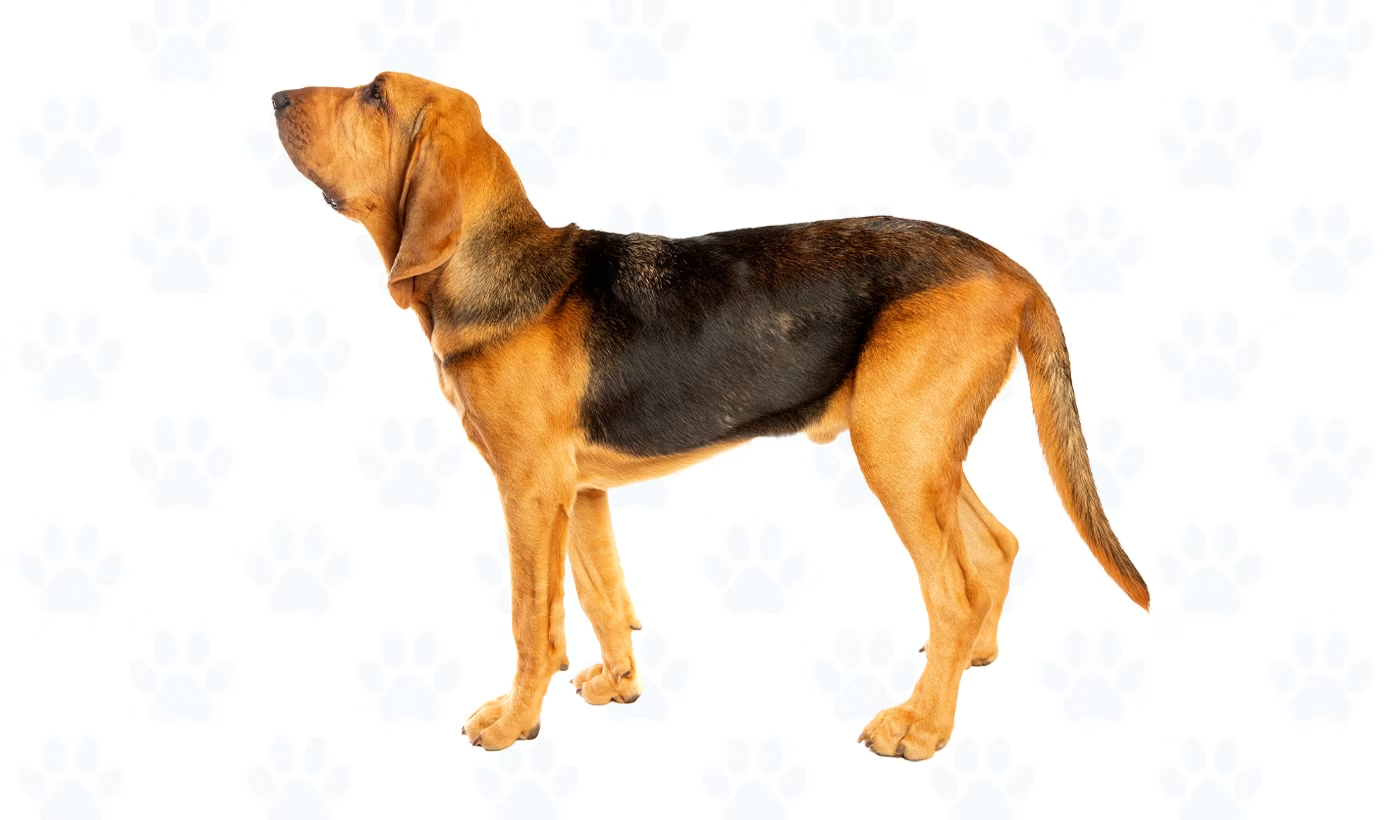
The American Kennel Club (AKC) recognizes 3 coat colors in Bloodhound: Black & Tan, Liver & Tan, and Red. The historical coat colors were more varied, but the modern Bloodhound color range is far more restricted. You may see the odd Bloodhound with white markings.
The Bloodhound coat is short and a bit coarse with light oil to it. They carry most of their weight in their bones with a large and thick frame. Their skin hangs loose and feels thin to the touch.
Bloodhounds have big heads and big floppy ears to help them with scent hunting. Their wrinkles and distinctive droopy face make for an iconic look, recognized the world over.
Size & Weight
Bloodhounds are large dogs and typically weigh 80-110 lbs. Adult males often stand 24-28 inches tall. Larger dogs are preferred in competition. Full Grown Female 24 in. / 80 lbs. Male 28 in. / 110 lbs.
Full Grown
Female
24 in. / 80 lbs.
Male
28 in. / 110 lbs.
Height is measured up to the shoulders.
Breed Characteristics
- Size & Coat
- Lifestyle
- Training & Behavior
How to Care for a Bloodhound
Caring for a Bloodhound involves consistent grooming, structured training and attention to health and nutrition. Their active lifestyle also requires regular exercise and a suitable living environment to support their energy and well-being.
Cost of Owning
Savings & Rewards
Unlock exclusive rewards with Petco Perks. Plus, members get 35% off their first Autoship order and 5% off all future orders.

Enjoy exclusive rewards on expert rated and pet parent approved products, like member prices, extra points and special offers designed to help you save on what your pet needs.

Get your pet’s essentials delivered on your schedule so you never run out and save up to 35% on your first order, then 5% on every order after that.
Your love story starts here.
Find adoptable pets near you with a simple search.
Fun Facts
Bloodhounds are a fixture in Hollywood films, both as companions and working dogs. Notable appearances include Cat on a Hot Tin Roof, Cool Hand Luke, The Shawshank Redemption, Best in Show, and many more.
One of the most iconic cartoon Bloodhounds appeared in the hit series “King of the Hill”on FOX. Ladybird, the Hill family pet, was a typical Bloodhound with a loving owner in Hank Hill.
One of the early appearances of Bloodhounds used by law enforcement was early 1800s England. Police officers used the breed to chase thieves and hunt down illegal poachers on crown land.
A Bloodhound called Nick Carter (no relation to the Backstreet Boys) deserves credit for the American familiarity and myths about the Bloodhound. A famous tracker in the early 1900s named Captain Mullikin owned and handled the iconic Bloodhound from Kentucky. Nick Carter once picked up a 300-hour old trail to find a missing person. The tracking testimony of a trained Bloodhound can be upheld in many courts of law.
History
No one knows exactly how the Bloodhound came to be, but most scholars connect the modern breed to the St. Hubert hound from the Saint-Hubert monastery in modern Belgium. Some experts argue that the Bloodhound is a dog of mixed breeding with similar genes to many modern hounds. The monks of Saint-Hubert would send several hounds to the King of France every year, a tradition that spanned the Middle Ages.
The first Bloodhound reference in English writing appeared in the 14th century. Most experts agree the dog came over in the Norman invasion, and Bloodhounds found work in the fields of England. Although the breed has a long history as a game tracker and hunter, they likely found work as tracking people back into early history. References to “sleuth hounds” go back as far as the 1200s. A 16th century physician named John Caius takes credit for the first modern description of a Bloodhound breed standard.
The Bloodhound had a popular following in America before the Civil War. While there is some debate the specific breeds used, many historians believe Bloodhounds tracked runaway slaves across the United States. Law enforcement agencies continued to use the breed to track fugitives and missing persons up to present day. The first Westminster showing of the breed took place in 1888, three years after Bloodhound recognition in 1885.