


Two Easy Ways to Start Earning Rewards!
Become a member today! Members-only pricing and offers, personalized care notifications, Vital Care points back on every purchase and more!
 Become a credit card member today!
Earn 2X Pals Rewards points at Petco
when you use Petco Pay!APPLY NOWLearn More About Petco Pay Benefits
Newfoundland Breed Facts and Information
Updated on June 17, 2025


The Newfoundland is a massive, gentle giant known for its sweet nature and devotion to family. Calm and loving, Newfies are natural with children and legendary water rescue dogs.
Temperament
Gentle, Loyal, Patient
Colors
Gray, Brown, Black, and Black-and-White
 WEIGHT
100 – 150 Pounds
 HEIGHT
26 – 28 Inches
 LIFE EXPECTANCY
9 – 10 years
Maintenance Level
Low Maintenance
High Maintenance
Friendliness
Reserved
Extroverted
About Newfoundlands
The Newfoundland is a giant breed dog that originated in the northeastern Canadian province of the same name and is regaled for its dedication to family and agreeable disposition.
The average Newfie is intelligent and trainable, loving, and mild-mannered. These traits make the Newfoundland ideal for family life, as well as providing comforting therapy. These are gentle giants who are fond of children and love the water. Newfoundlands are powerful swimmers and have earned a larger than life reputation after performing many heroic water rescues, from saving Napoleon in 1815 to a drowning gold dredger in 1995. Their luscious, thick coats are a dream to touch but a nightmare to maintain. Although the breed is very large and has a strong working drive, Newfoundlands are usually laid-back, and require only moderate daily exercise.
Origin: Canada Other Names: Newf, Newfie
Working Group
Dogs of the Working Group were bred to perform such jobs as guarding property, pulling sleds and performing water rescues.
Newfoundland Appearance
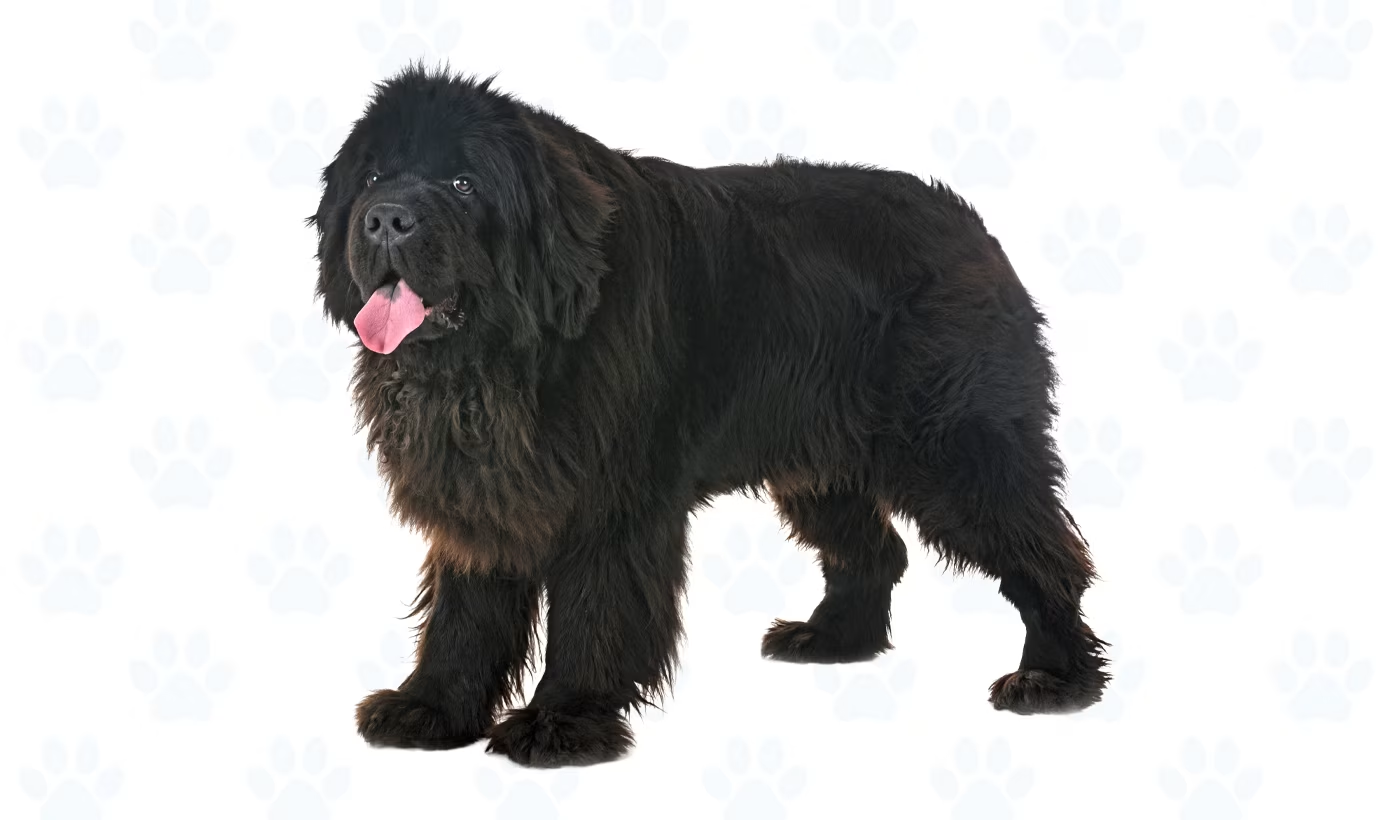
Newfoundlands are giant dogs that can easily be mistaken as black bears at a glance. The breed weighs well over 100 pounds and is recognized by its drooping ears, slobbering jowls, and sweet disposition.
The Newfoundland's head is massive, with a square muzzle, deep-set eyes, and relatively small triangular ears. They are muscular and thick-boned in the body, with a straight back and long, bushy tail. Newfoundlands have a long, thick double coat that is woolly underneath and silky on top. The coat is usually black but can also be brown, gray, or white and black. White and black Newfies are sometimes called 'Landseers', named after the painter Edwin Landseer who often depicted this variety in his works.
Use the arrow keys to switch between coat color examples.
Size & Weight
Newfies are one of the largest dog breeds, standing from 26-28 inches tall and weighing between 100-150 lbs.
Full Grown
Female
26 in. / 100 lbs.
Male
28 in. / 150 lbs.
Height is measured up to the shoulders.
Characteristics
Newfoundlands are usually described as hearty, patient, and gentle. They’re known for their pleasant, reliable dispositions and sociability with people and other pets.
- Size & Coat
- Lifestyle
- Training & Behavior
How to Care for a Newfoundland
Bringing a Newfoundland into your home means committing to a lifestyle that balances their moderate exercise needs with intensive grooming, early training, attentive health monitoring, and a nutrition plan suited to their giant size.
Cost of Owning
Savings & Rewards
Unlock exclusive rewards with Petco Perks. Plus, members get 35% off their first Autoship order and 5% off all future orders.

Enjoy exclusive rewards on expert rated and pet parent approved products, like member prices, extra points and special offers designed to help you save on what your pet needs.

Get your pet’s essentials delivered on your schedule so you never run out and save up to 35% on your first order, then 5% on every order after that.
Your love story starts here.
Find adoptable pets near you with a simple search.
Fun Facts
Newfoundlands are memorialized throughout literature and cinema, including "Nana", the children' guardian in J.M. Barrie's Peter Pan.
Newfies have completely webbed feet, like ducks, and the longest toes of any breed.
The biggest Newfoundland on record was nearly six feet long from nose to tail, and weighed 260 lbs.
Seaman was one famous Newfoundland who accompanied explorers Lewis and Clark across the American frontier.
History
The heritage of the Newfoundland is unclear, although it's commonly believed that the breed is a descendant of the Great Pyrenees, which was brought to Canada by Basque fisherman in the 15th century. It's possible that the breed attributes some of its lineage to Labradors, Huskies and Tibetan Mastiffs as well. In Canada, the breed was further developed as a hardy and amicable working companion that could assist sailors on the high seas. Whether it was hauling in a net, an overboard crew member, or a cart with the day's catch, Newfoundlands were equally obliged. After gaining popularity in North America, Newfoundlands were extensively bred in England from the early 19th century. Today, most Newfoundlands are descended from this English stock. In 1886, the Newfoundland was officially recognized by the AKC, and had already become a beloved companion and working dog in the Western world.