


Two Easy Ways to Start Earning Rewards!
Become a member today! Members-only pricing and offers, personalized care notifications, Vital Care points back on every purchase and more!
 Become a credit card member today!
Earn 2X Pals Rewards points at Petco
when you use Petco Pay!APPLY NOWLearn More About Petco Pay Benefits
Miniature Pinscher
Updated on June 17, 2025


The Miniature Pinscher is a bold, energetic toy breed known for its confident attitude and lively personality. Despite its small size, this alert and spirited companion thrives with active owners who can provide structure, playtime and consistent training.
Temperament
Confident, Energetic, Bold
Colors
Black & Rust, Chocolate & Rust, Red
 WEIGHT
8 - 10 Pounds
 HEIGHT
10 - 12.5 Inches
 LIFE EXPECTANCY
12 - 16 Years
Maintenance Level
Low Maintenance
High Maintenance
Friendliness
Reserved
Extroverted
About Miniature Pinschers
Miniature Pinschers, the “King of the Toys”, require royal treatment by demanding an audience and respect for their exacting personalities. The Miniature Pinscher is lively, spunky, assertive and vocal. They have a tough-guy attitude, although the breed weighs in at just 10 lbs, on the heavy side. Size-wise, Miniature Pinschers are suitable for apartments, and need regular opportunities to vent all their energy. While not known for being compliant, Miniature Pinschers can—and must—learn basic obedience training to understand that they’re not the bosses. Their confidence and suspicion make them great guard dogs and their energy makes them well suited for families, provided that the family members are generous with cuddling and light with roughhousing.
Origin: Germany Other Names: Min Pin
Toy Group
The diminutive size and winsome expressions of Toy dogs illustrate the main function of this Group: to embody sheer delight.
Breed Appearance
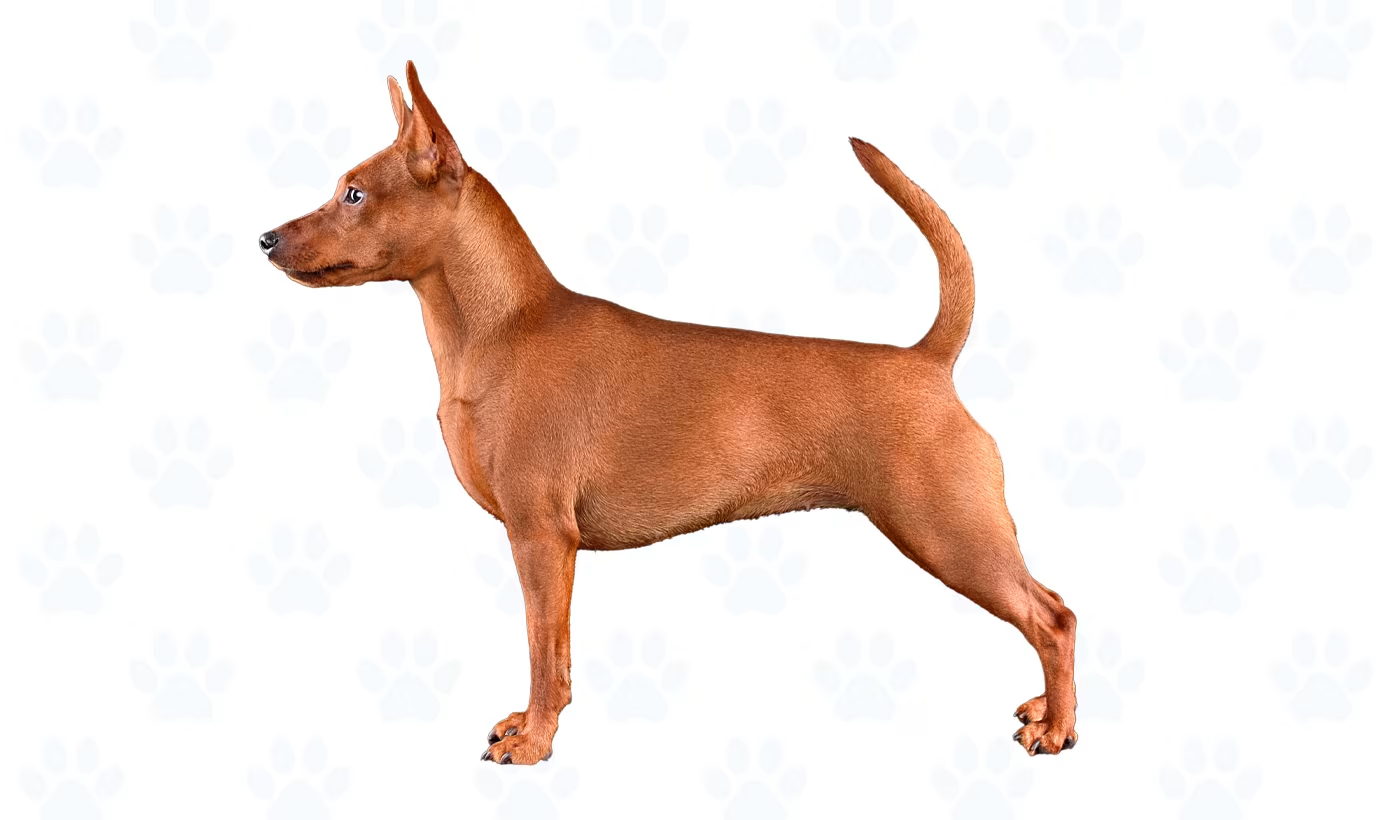
The Miniature Pinscher is known as the “King of the Toys”, for its diminutive size combined with a regal appearance and confident attitude. They are easily recognized as seemingly miniature versions of Doberman Pinschers, because one of their most common coat colors is Black and Tan.
This toy breed has a compact, wedge-shaped body with long, graceful legs. They have a high-stepping prance, often likened to a Hackney pony. Their muzzle is slightly tapered, they have full, oval eyes, and high-set ears that stand erect whether cropped or natural. Their backs slope slightly toward the hindquarters and the tail is set high, usually docked in proportion with the dog.
Miniature Pinschers have a hard, sleek coat that is uniformly short all over the body. Their coats can be seen in a combination of the colors Black, Chocolate, Blue, Fawn, Tan, Rust, and Red.
Use the arrow keys to switch between coat color examples.
Size & Weight
A lot of spirit is packed into the tiny Miniature Pinscher body. They weigh just 8-10 lbs, and stand up to 12.5 inches tall at the shoulder.
Full Grown
Female
10 in. / 8 lbs.
Male
13 in. / 10 lbs.
Height is measured up to the shoulders.
Characteristics
- Size & Coat
- Lifestyle
- Training & Behavior
How to Care for a Min Pin
Caring for a Miniature Pinscher involves regular exercise, consistent training and plenty of mental stimulation to match their high energy. With minimal grooming needs, a balanced diet and routine care, they make lively and engaging companions.
Cost of Owning
Savings & Rewards
Unlock exclusive rewards with Petco Perks. Plus, members get 35% off their first Autoship order and 5% off all future orders.

Enjoy exclusive rewards on expert rated and pet parent approved products, like member prices, extra points and special offers designed to help you save on what your pet needs.

Get your pet’s essentials delivered on your schedule so you never run out and save up to 35% on your first order, then 5% on every order after that.
Your love story starts here.
Find adoptable pets near you with a simple search.
Fun Facts
Contrary to popular thought, the Miniature Pinscher is actually not a scaled-down version of the Doberman Pinscher. It’s a separate breed.
Their German name, “Dwarfs Pincher” literally translates to “Dwarf Biter”.
Despite winning the Toy Group at the Westminster Kennel Club dog show four times, a Miniature Pinscher has yet to become “Best in Show” at the competition.
Joey Fatone, from the 90’s boy-band NYSNC, owns a Miniature Pinscher.
History
The Miniature Pinscher is thought to be an old breed, but the documented standard didn’t exist until about 200 years ago. Most likely crossing the German Pinscher with the Dachshund and Italian Greyhound created this breed. Even though they look like miniature Doberman Pinschers, Miniature Pinschers are actually a distinct breed and about 100 years older. The first Miniature Pinschers were working dogs, used to exterminate vermin in homes and stables. They later became a companion breed, most popular in Germany and Scandinavian countries. The breed was first registered in the AKC in 1925.