


Two Easy Ways to Start Earning Rewards!
Become a member today! Members-only pricing and offers, personalized care notifications, Vital Care points back on every purchase and more!
 Become a credit card member today!
Earn 2X Pals Rewards points at Petco
when you use Petco Pay!APPLY NOWLearn More About Petco Pay Benefits
Havanese
Updated on June 17, 2025


The Havanese is a cheerful, people-loving companion known for its affectionate nature and playful spirit. These small dogs thrive on closeness, adapt well to many living spaces, and bring warmth and charm to households that enjoy an interactive, devoted pet.
Temperament
Affectionate, Social, Playful
Colors
Black, White, Cream, Gold, Red, Chocolate & More
 WEIGHT
7 - 13 Pounds
 HEIGHT
8 - 11 Inches
 LIFE EXPECTANCY
14 - 16 YEARS
Maintenance Level
Low Maintenance
High Maintenance
Friendliness
Reserved
Extroverted
About Havanese
Havanese are related to the Bichon breed family and hold the title “National Dog of Cuba.”These sprite and curious little dogs are a favorite of families and anyone looking for a cuddly, lovable dog. They are faithful companions with a lot of spirit and personality. Living with a Havanese means giving out a lot of love – they don’t do well if left alone for long periods of isolation. These little dogs give out as much affection as they take in, so the Havanese makes an ideal companion dog.
Other Names: Bichon Havanês, Havanezer, Bichon Habanero
Toy Group
The diminutive size and winsome expressions of Toy dogs illustrate the main function of this Group: to embody sheer delight. Don't let their tiny stature fool you, since many Toys are tough as nails! If you haven't yet experienced the barking of an angry Chihuahua, for example, well, just wait. Toy dogs will always be popular with city dwellers and people without much living space. They make ideal apartment dogs and terrific lap warmers on nippy nights.
Breed Appearance
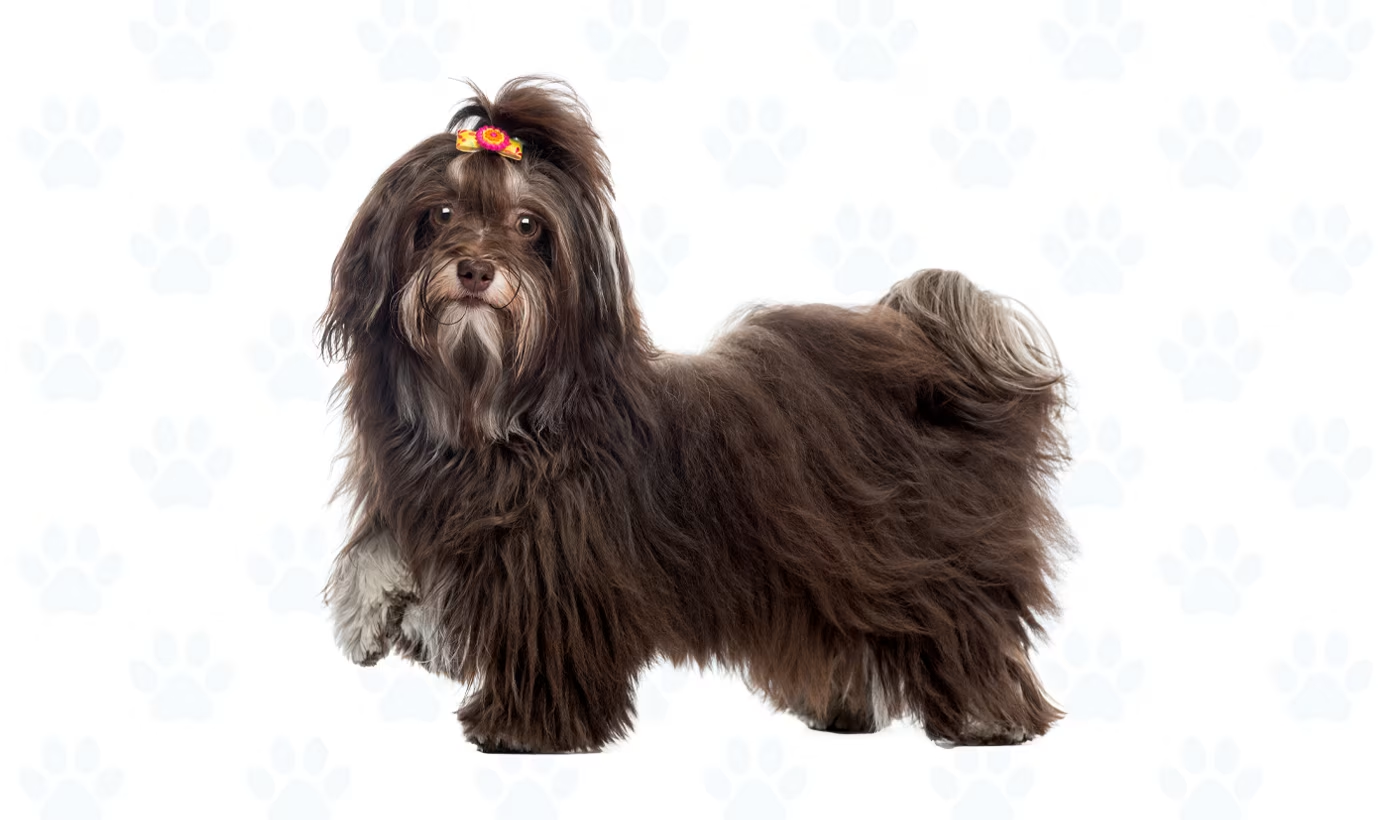
The American Kennel Club (AKC) recognizes 16 different coat colors and combinations for competition. The AKC-recognized colors include white, black, black brindle, chocolate, cream, fawn, gold, gold brindle, gold sable, red, red sable, red brindle, silver, silver brindle, black & tan, and black & silver. The AKC states that all colors and markings are permissible for competition.
The Havanese is a small yet solid dog with tons of charm and personality. They are very friendly and intelligent with a playful attitude. They are usually a bit longer than they are tall with short forelegs and a straight topline.
Their coat is silky and long with softness and a lightweight feel. The undercoat is often minimal or absent altogether. It’s extremely important to brush their fur regularly since it’s prone to tangles and matting if left alone.
Use the arrow keys to switch between coat color examples.
Size & Weight
Havanese are small dogs. An adult male is typically around 8 to 11 inches at the shoulder. In general, they vary between 7 and 13 pounds.
Full Grown
Female
8 in. / 7 lbs.
Male
11 in. / 13 lbs.
Height is measured up to the shoulders.
Characteristics
- Size & Coat
- Lifestyle
- Training & Behavior
How to Care for a Havanese
Havanese do best when their affectionate nature and lively energy are supported with regular grooming, engaging training, and daily movement. Thoughtful nutrition, preventive care, and plenty of companionship help these social pups stay happy, healthy, and thriving at home.
Cost of Owning
Savings & Rewards
Unlock exclusive rewards with Petco Perks. Plus, members get 35% off their first Autoship order and 5% off all future orders.

Enjoy exclusive rewards on expert rated and pet parent approved products, like member prices, extra points and special offers designed to help you save on what your pet needs.

Get your pet’s essentials delivered on your schedule so you never run out and save up to 35% on your first order, then 5% on every order after that.
Cross Breeds
Select a Breed to Cross
Choose a breed from the dropdown to see potential crosses.
Bichon Frise
Your love story starts here.
Find adoptable pets near you with a simple search.
Fun Facts
The Havanese is the only dog breed considered a native of the island of Cuba. They take their name from the capital city of Havana.
Many famous celebrities and dignitaries are proud Havanese supporters. Ernest Hemingway, Barbara Walters, Queen Anne, and Venus Williams all had Havanese as pets.
The breed faced extinction, but a group of Cuban families left Cuba for the US and started a breeding program to bring the Havanese back to healthy numbers.
Some Havanese are able to sniff out termites and household mold to help with removal and renovations. That takes some serious sniffing power!
History
Origin: Cuba
The Havanese started out as a variation of the Bichon breed. The first Havanese forefathers came to Cuba from Tenerife, Canary Islands. Some historians believe the breed came from Malta based on writings of Aristotle and other ancient writers. Spanish colonist and wealthy Cubans fell in love with the breed for its charm and gentle nature.
After the Cuban revolution, the breed became associated with wealth and privilege. Many rich Cubans who fled Castro couldn’t bring their pets, so the breed fell into a period of unpopularity. Cuban-American breeders in the 1970s managed to save the Havanese through a selective breeding program in Florida. The AKC didn’t recognize the breed officially until 1999.