


Two Easy Ways to Start Earning Rewards!
Become a member today! Members-only pricing and offers, personalized care notifications, Vital Care points back on every purchase and more!
 Become a credit card member today!
Earn 2X Pals Rewards points at Petco
when you use Petco Pay!APPLY NOWLearn More About Petco Pay Benefits
Great Pyrenees Breed Facts and Information
Updated on June 17, 2025


Temperament
Protective, gentle, independent
Coat Color
White w/ markings
 Weight
90 - 130 Pounds
 Height
26 - 32 Inches
 Life Expectancy
10 - 12 Years
Maintenance Level
Low Maintenance
High Maintenance
Personality
Reserved
Extroverted
About Great Pyrenees
The Great Pyrenees takes its name from the Pyrenees Mountains that form a natural border between France and Spain. The breed originated here as a working dog that roamed the region’s rough terrain guarding livestock. Today, the Great Pyrenees is a popular family dog revered for their affectionate, mellow nature.
Origin: France, Spain Other Names: Pyrenean Mountain Dog, Pyr
Working Group
Dogs of the Working Group were bred to perform such jobs as guarding property, pulling sleds and performing water rescues. Working Group dogs have been invaluable assets to man throughout the ages. Quick to learn, these intelligent, capable animals make solid companions. Their considerable dimensions and strength alone, however, make many working dogs unsuitable as pets for average families. And again, by virtue of their size alone, these dogs must be properly trained.
Great Pyrenees Appearance
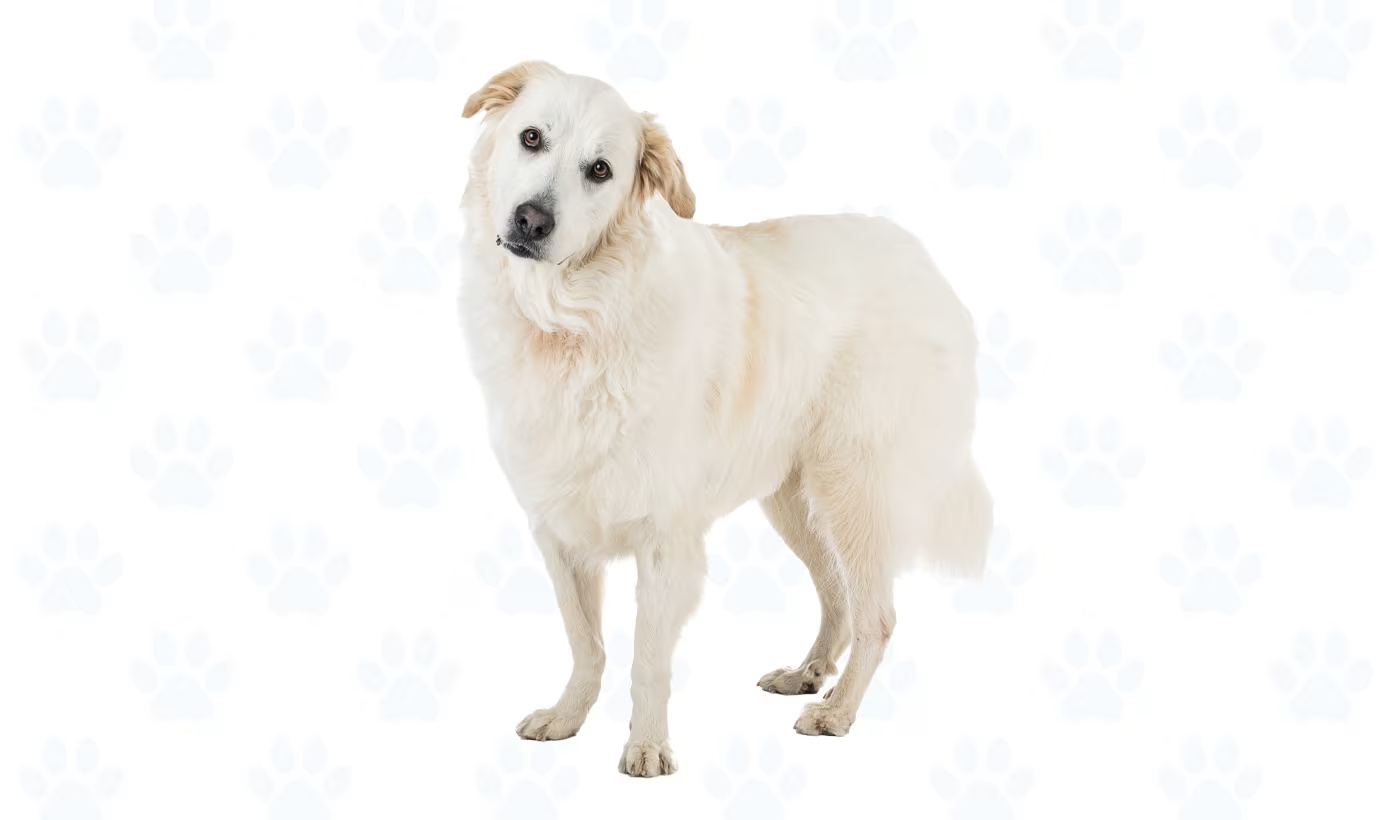
A Great Pyrenees should look strong and elegant, with a lively, friendly expression. The head should not appear too large or heavy, while the neck and chest should be strong and muscular. The tail should be carried low when the dog is at rest, and can rise over the back when the dog is excited. Great Pyrenees have a double coat of hair to protect them from harsh weather. The soft, fine undercoat is covered by a thicker, coarse overcoat.
The AKC recognizes one color and four markings for the Great Pyrenees. White is the only acceptable color, while badger markings, gray markings, reddish brown markings, and tan markings are acceptable.
Size & Weight
Male Pyrs are usually 27 to 32 inches tall and weigh 110 to 130 pounds. Females are usually 26 to 31 inches tall and weigh 90 to 115 pounds.
Full Grown
Female
26 in. / 90 lbs.
Male
31 in. / 110 lbs.
Height is measured up to the shoulders.
Characteristics
- Size & Coat
- Lifestyle
- Training & Behavior
How to Care for a Great Pyrenees
Great Pyrenees can be willful, stubborn, and difficult if they are not properly trained. Leaving them alone for long periods of time can cause them to become destructive. If you plan to let your Great Pyrenees out of the house, you should be sure that the perimeter of your yard is carefully secured, because these dogs can be real escape artists. They love exploring and claiming new territory, so boundaries need to be established early. It is very difficult to train a Great Pyrenees to walk off leash because they sometimes struggle with obeying commands that do not interest them.
Cost of Owning
Savings & Rewards
Unlock exclusive rewards with Petco Perks. Plus, members get 35% off their first Autoship order and 5% off all future orders.

Enjoy exclusive rewards on expert rated and pet parent approved products, like member prices, extra points and special offers designed to help you save on what your pet needs.

Get your pet’s essentials delivered on your schedule so you never run out and save up to 35% on your first order, then 5% on every order after that.
Your love story starts here.
Find adoptable pets near you with a simple search.
Fun Facts
The famous singer, Lady Gaga, owns a Great Pyrenees.
A Great Pyrenees named Duke the Dog was elected ceremonial mayor of the town of Cormorant, Minnesota in 2014.
Many Japanese anime and manga books feature Great Pyrenees dogs.
History
Great Pyrenees have lived and worked in the Pyrenees Mountains for thousands of years. The breed was developed to assist shepherds by watching over the flock and keeping animals from straying. White hair was a desirable characteristic for these dogs because it allowed them to be distinguished from wild animals. At first, the breed was purely a working dog owned by peasants, but in 1675, the Dauphin (the heir to the French crown) declared Great Pyrenees to be the Royal Dog of France, and they subsequently became popular with the nobility.
In the 1800’s Great Pyrenees began to spread throughout Europe. Some Great Pyrenees were brought to St. Bernard Hospice to be crossbred with St. Bernard dogs in an effort to replenish that great breed. However, in the Pyrenees Mountains, lax breeding practices were diluting the quality of the stock. During the two world wars, the number of Great Pyrenees declined even further. However, after the war breeders in both America and Europe worked diligently to restore the Great Pyrenees breed. Great Pyrenees were first recognized by the AKC in 1933.