


Two Easy Ways to Start Earning Rewards!
Become a member today! Members-only pricing and offers, personalized care notifications, Vital Care points back on every purchase and more!
 Become a credit card member today!
Earn 2X Pals Rewards points at Petco
when you use Petco Pay!APPLY NOWLearn More About Petco Pay Benefits
Great Dane Breed Facts and Information
Updated on June 17, 2025


The Great Dane is a gentle giant beloved for their affectionate nature and calm dignity. Loving and easy to train, they thrive in homes with plenty of space and people to adore.
Temperament
Gentle, Affectionate, Loyal
Colors
Black, Blue, Brindle, Fawn, Harlequin, Mantle, & More
 WEIGHT
100 – 200 Pounds
 HEIGHT
28 – 34 Inches
 LIFE EXPECTANCY
7 – 10 Years
Maintenance Level
Low Maintenance
High Maintenance
About Great Danes
Origin: Germany
Other Names: German Mastiff, Deutsche Dogge, Gentle Giant, Apollo of Dogs, Dane
About Section Text: Great Danes are some of the biggest dogs on the planet, but don't let their size fool you. They are known as the gentle giants of the dog world. Great Danes seek affection and take comfort in human company and attention. With a low prey drive and a loving nature, the Great Dane has won the hearts of dog owners around the world.
Working Group
Dogs of the AKC Working Group were bred to perform important jobs such as guarding property, pulling sleds, and conducting water rescues. Throughout history, these dogs have been invaluable partners to humans. Breeds like the Doberman Pinscher, Siberian Husky, and Great Dane are part of this group. Intelligent and quick to learn, they can be excellent companions, but their large size and strength require consistent training and may not be suitable for every household.
Breed Appearance
The American Kennel Club (AKC) maintains the breed standard for the Great Dane. These tall, massive dogs exhibit a regal appearance and a dignity that is unmistakable. Their body is smooth and powerful with well-formed limbs and a proud head. They are unique in their graceful and strong movements as they gallop across a field or pull a cart to market.
Great Danes come in many shades and styles of coat. The AKC standard colors are black, blue, brindle, fawn, harlequin, mantle, merle, white, and black & white. The breed standards allow for black, blue, and white marking only. Blue mask, chocolate coloring, and other AKC disqualifications are nonetheless beautiful on these magnificent animals.
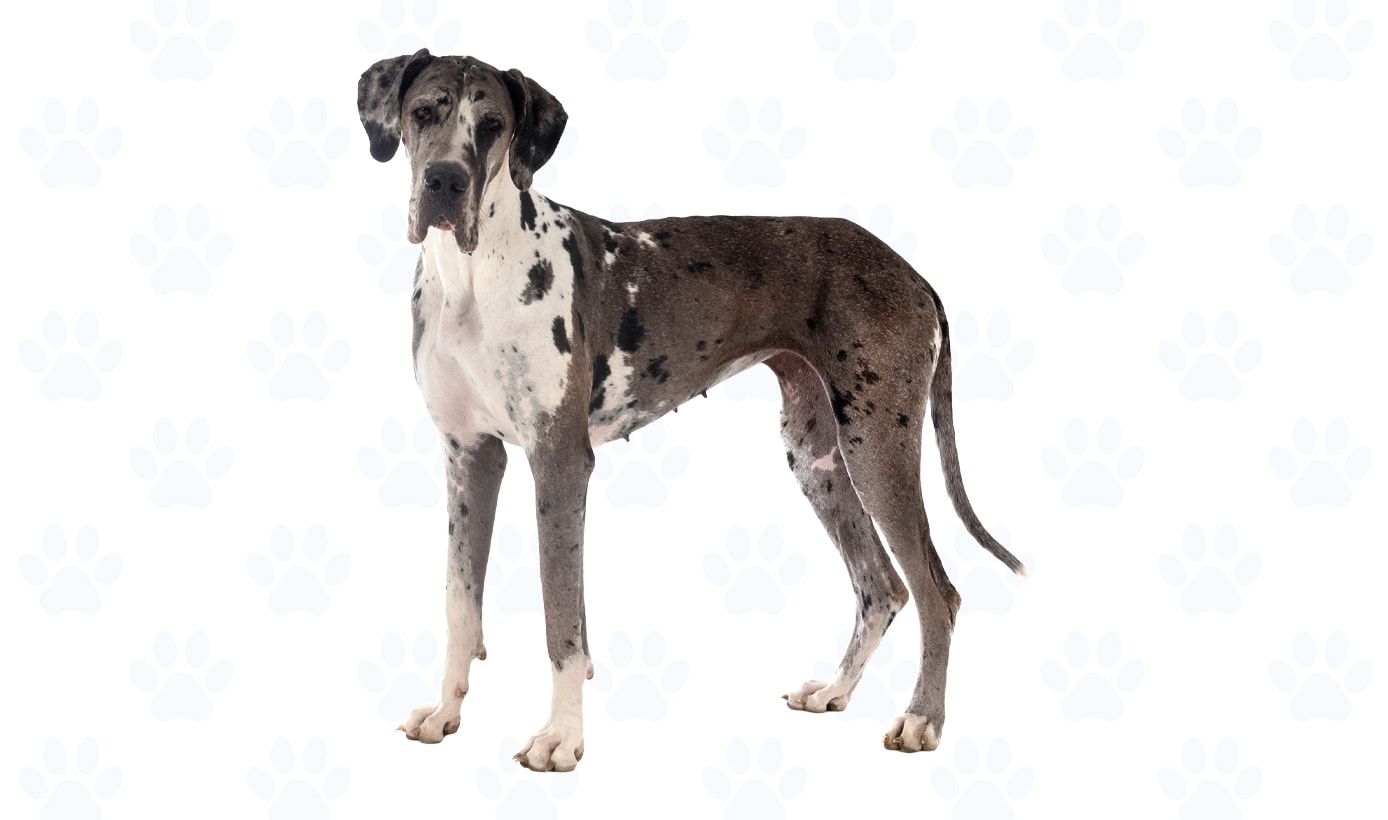
Size & Weight
Great Danes are one of the biggest breeds out there. Most adult males are taller than 30 inches at the shoulder, and the record size for a dog was a Great Dane over 44 inches tall at the shoulder. These are large dogs!
Full Grown
Female
28 in. / 100 lbs.
Male
34 in. / 200 lbs.
Height is measured up to the shoulders.
Characteristics
- Size & Coat
- Lifestyle
- Training & Behavior
How to Care for a Great Dane
Caring for a Great Dane means embracing a lifestyle built around their unique giant-breed needs — from a specialized nutrition plan and gentle exercise routine to consistent training, routine health monitoring, mindful grooming, and a living space roomy enough to match their larger-than-life presence.
Cost of Owning
Savings & Rewards
Unlock exclusive rewards with Petco Perks. Plus, members get 35% off their first Autoship order and 5% off all future orders.

Enjoy exclusive rewards on expert rated and pet parent approved products, like member prices, extra points and special offers designed to help you save on what your pet needs.

Get your pet’s essentials delivered on your schedule so you never run out and save up to 35% on your first order, then 5% on every order after that.
Your love story starts here.
Find adoptable pets near you with a simple search.
Fun Facts
German princes would let their prized Great Danes sleep at the foot of their bed as a token of appreciation and respect. These "chamber dogs" often wore gold collars and were adorned with other signs of wealth and privilege.
The Great Dane "Zeus" holds the record for tallest dog on Earth. Although he died in 2014, no dog has broken his record of 44 inches tall at the shoulder. Imagine how much he could eat!
One of the most famous Great Danes is Scooby Doo. It's not certain whether the animators knew or not, but Great Danes were once known as a good breed to ward away evil spirits and ghosts! Scooby was a perfect fit as a companion for those meddling kids.
Despite the name, the dog is not Danish but German in origin. The name just kind of stuck after its introduction in the 1700s.
History
European nobility in the Middle Ages prized a good, strong dog for hunting and other pursuits. Many Continental European countries imported large dogs from Ireland and England, including breeds such as the English Mastiff and the Irish Wolfhound. Over time, German breeders developed a unique dog for life in the German countryside, hunting boar, bear and deer.
In the 1800s, the Great Dane was called the German Boarhound in most English-speaking countries in the world. Due to increasing tension and hostility to German culture, English breeders changed the name to the Great Dane. The first appearance of the name "Great Dane" comes from the French naturalist Georges-Louis Leclerc in one of his drawings from 1755.