


Two Easy Ways to Start Earning Rewards!
Become a member today! Members-only pricing and offers, personalized care notifications, Vital Care points back on every purchase and more!
 Become a credit card member today!
Earn 2X Pals Rewards points at Petco
when you use Petco Pay!APPLY NOWLearn More About Petco Pay Benefits
Dachshund
Updated on June 17, 2025


Dachshunds are confident, curious companions with a big personality packed into a small frame. Deeply loyal and affectionate with their people, they balance independence with a love for closeness, making them engaging, entertaining family dogs.
Temperament
Brave, Curious, Devoted
AKC-Recognized Colors
Black & Tan, Chocolate, Red, Cream, Dapple
 WEIGHT
15 - 30 Pounds
 HEIGHT
8 - 9 Inches
 LIFE EXPECTANCY
12–15 years
Maintenance Level
Low Maintenance
High Maintenance
Friendliness
Reserved
Extroverted
About Dachshund
Dachshunds are half a dog high, a dog and a half long, and possess two times the courage of dogs twice their size. This breed is the smallest of the hound group, and displays the typical characteristics, plus some. Originally bred in Germany, Dachshunds are independent, plucky, curious, and boisterous companion dogs with roots in the field, flushing underground game. The breed comes in many varieties, with two standard sizes, three coat types and a multitude of colors. They are hardy and athletic by nature but do suffer from spinal injuries. Apparently the perks outweigh the risks, because Dachshunds are the 13th most popular dog breed in America, thanks to their manageable size, charming personalities, and high spirits.
Origin: Germany
Other Names: Dachsie, Doxie, Wiener Dog, Dackel or Tekel in German
Hound Group
Most hounds share the common ancestral trait of being used for hunting. Most hounds share hunting roots, using keen scenting ability or impressive stamina to track and pursue quarry. The group is highly diverse, spanning breeds like Beagles, Afghan Hounds, Pharaoh Hounds, and Norwegian Elkhounds. Many are also known for baying, a distinctive vocalization that’s worth experiencing before bringing a hound home.
Breed Appearance
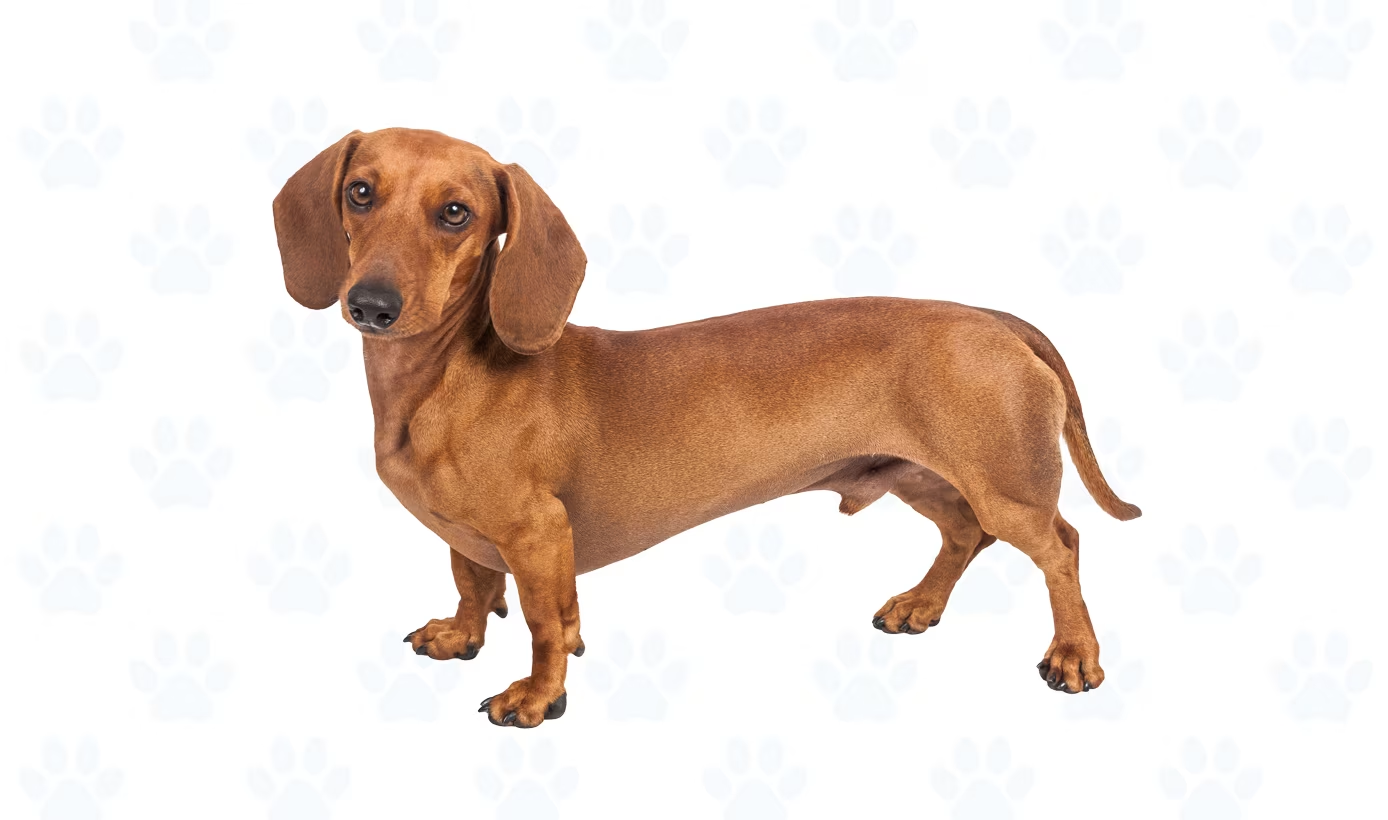
Despite their primary reputation as household dogs, the Dachshund couldn’t be more specifically designed for hunting underground game. They have a long body that is low to the ground, allowing them to easily navigate into tight areas. Proportionately, Dachshunds have a large, prominent chest, which gives the dog plenty of digging power and lung capacity for underground jaunts. They have short, powerful legs with webbed paws that move heaps of dirt with efficiency. The hind legs should look like a series of right angles connected. Their heads taper evenly down a long, slightly arched muzzle. They have long, rounded ears, which gathered in scents and keep debris from entering the ear canal.
Dachshunds come in a variety of coat colors and lengths. There are three coat varieties: smooth, wirehaired, and longhaired. The possible coat colors are numerous but most commonly seen in black, blue, tan, wheaten, fawn, red, and wild boar, which is a mix of black, grey, and brown.
Use the arrow keys to switch between coat color examples.
Size & Weight
Dachshunds come in two recognized sizes, miniature and standard. Minis weigh between 8-11 pounds and stand 5-7 inches tall at the shoulder. Standards weigh 15-30 pounds and stand 8-9 inches.
Full Grown
Female
8 in. / 15 lbs.
Male
9 in. / 30 lbs.
Height is measured up to the shoulders.
Characteristics
- Size & Coat
- Lifestyle
- Training & Behavior
How to Care for a Dachshund
Caring for a Dachshund means supporting their energetic spirit while protecting their unique build. From balanced nutrition and safe exercise to consistent training and routine grooming, thoughtful care helps them stay happy, healthy, and thriving at every life stage.
Cost of Owning
Savings & Rewards
Unlock exclusive rewards with Vital Care, or enjoy up to 35% off essentials when you subscribe with Autoship.

Enjoy exclusive rewards every time you shop. Get member-only deals, points, and special offers designed to help you save more on what your pet needs.

Never run out of the essentials. Subscribe and get your pet’s favorites delivered on schedule—with up to 35% off plus the convenience of automatic refills.
Your love story starts here.
Find adoptable pets near you with a simple search.
Fun Facts
Each Dachshund coat has a specific purpose: Wirehair protects the dog in thorny underbrush, longhair is ideal for water, and smooth coats enable the dog to slide along underground tunnels.
Hotdogs were actually named after the Dachshund.
Dachshunds tend to be an artist’s muse. Pablo Picasso, E.B. White, and Andy Warhol all owned and depicted Dachshunds in their work.
Dachshunds were the very first Olympic mascot for the games in Munich, 1972.
The Wienerschnitzel fast-food chain sponsors the Wiener Nationals race every December in San Diego, California.
History
Dachshund is a German name meaning “Badger Dog.” Since the 15th century, these hardy dogs were used to track and flush out small to medium sized underground game like rabbits, fox, and badgers. Smooth is the original variety and other dog breeds, perhaps spaniels, Schnauzers, and wirehair terriers, were gradually added into the pool to create the two longer-haired varieties. By the 19th century Dachshunds had become popular companion dogs in Europe and were recognized by the AKC in 1885. During the first and second world war their popularity waned due to strong associations with Germany, but by the 1950s they were coming back into popularity in the United States and Europe.