


Two Easy Ways to Start Earning Rewards!
Become a member today! Members-only pricing and offers, personalized care notifications, Vital Care points back on every purchase and more!
 Become a credit card member today!
Earn 2X Pals Rewards points at Petco
when you use Petco Pay!APPLY NOWLearn More About Petco Pay Benefits
Cavalier King Charles Spaniel Breed Facts and Information
Updated on June 17, 2025


The Cavalier King Charles Spaniel is an affectionate, gentle toy breed that thrives on companionship. Known for its relaxed nature and friendly disposition, this breed is well suited for families, apartments, and laid-back lifestyles.
TEMPERAMENT
Affectionate, Gentle, Relaxed
COLORS
Black & White, Blenheim, Tri-Color, Black & Tan, Red
 WEIGHT
13 – 18 Pounds
 HEIGHT
12 – 13 Inches
 LIFE EXPECTANCY
9 – 14 years
Maintenance Level
Low Maintenance
High Maintenance
Friendliness
Reserved
Extroverted
About Cavalier King Charles
One of the sportiest of the toy breeds, the Cavalier King Charles Spaniel is like the Mazda Miata of dogs—fun and low maintenance, retaining a few athletic features. The breed is known as an affectionate, gentle, and relaxed companion. They’re devoted to their owners and ideal for families. Unlike some other small breeds, the Cavalier is relaxed and rarely barks. Instead, they have a sweet greeting for everyone, including strangers and other dogs. Their coat comes in a few standard color combinations and is medium length. They shed an average amount and require some regular brushing. Unfortunately, the breed is prone to heart problems but otherwise can enjoy a healthy life of about 12 years.
Origin: United Kingdom Other Names: Cavalier , Cavvie, Cavalier, King Charles Cavalier, CKCS
Toy Group
The diminutive size and winsome expressions of Toy dogs illustrate the main function of this Group: to embody sheer delight.
Breed Appearance
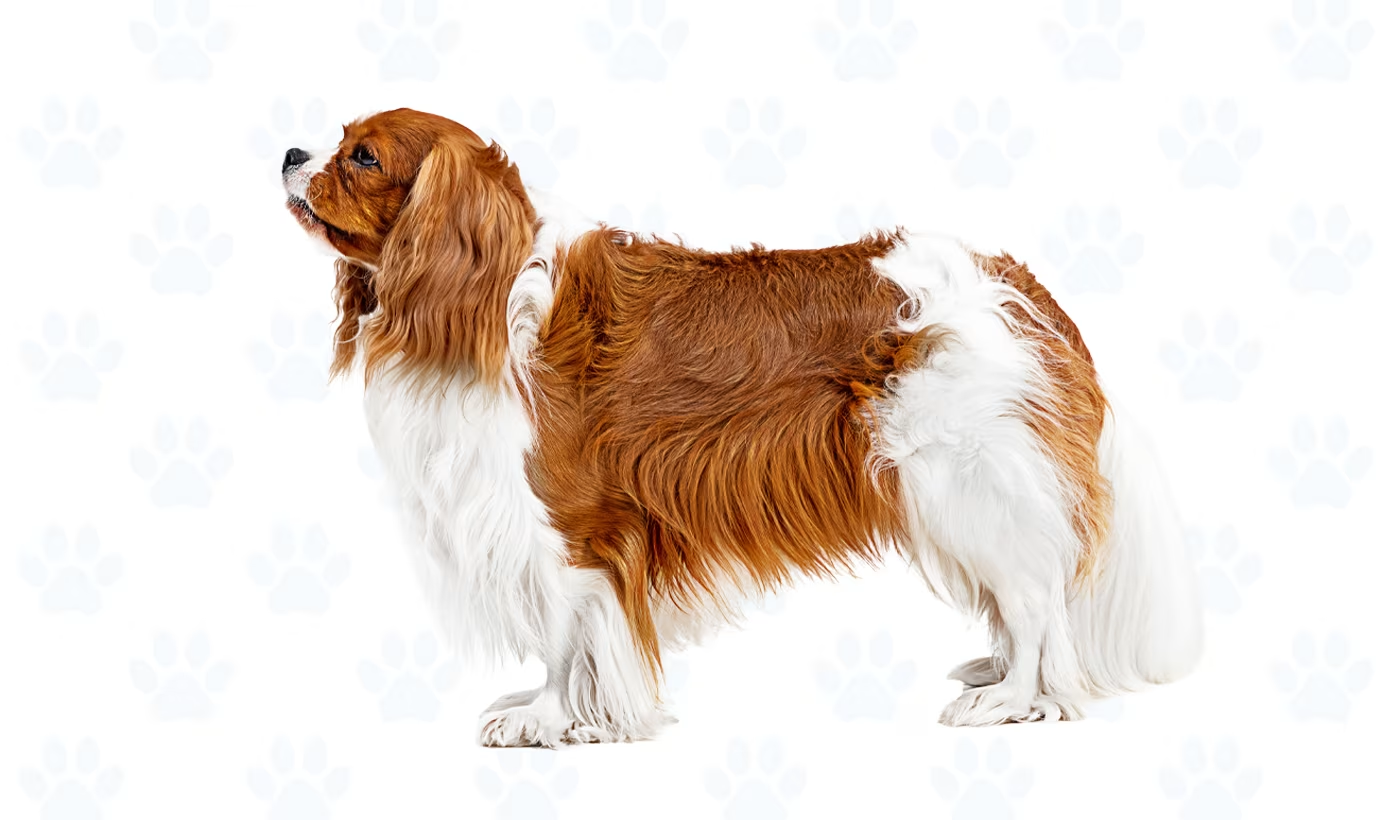
The Cavalier is a well-proportioned toy spaniel, slightly longer than it is tall, with an easily recognized face and coat. The Cavalier head is square, flat between the ears and in proportion to rest its body. They have medium-length triangle ears that lay next to the face, and have a compassionate, interested expression. Their eyes are round, dark brown, and set well apart though not overly prominent. The ears grow to be feathered and should not be trimmed. They have a fairly long neck with slight arch, and a long tail that is usually carried below the line of the back.
The Cavalier coat is silky and feathered in some places, like the ears, chest, legs and tail. There are three coat variations, each with a unique name: Prince Charles (tricolor), King Charles (black and tan), Ruby (red), and Blenheim (red and white). The Cavalier resembles another breed called the King Charles Spaniel (aka English Toy Spaniel) but can be distinguished by its longer muzzle.
Size & Weight
The Cavalier is a small dog, although one of the larger toy breeds. On average, they stand 12-13-inches tall and weigh between 13-18 lbs.
Full Grown
Female
12 in. / 13 lbs.
Male
13 in. / 18 lbs.
Height is measured up to the shoulders.
Breed Characteristics
- Size & Coat
- Lifestyle
- Training & Behavior
How to Care for a Cavalier King Charles Spaniel
Caring for a Cavalier King Charles Spaniel means balancing gentle grooming, positive training, and regular exercise with attentive health care and proper nutrition. Their adaptable lifestyle needs make them well suited for a variety of homes when these basics are met.
Cost of Owning
Savings & Rewards
Unlock exclusive rewards with Petco Perks. Plus, members get 35% off their first Autoship order and 5% off all future orders.

Enjoy exclusive rewards on expert rated and pet parent approved products, like member prices, extra points and special offers designed to help you save on what your pet needs.

Get your pet’s essentials delivered on your schedule so you never run out and save up to 35% on your first order, then 5% on every order after that.
Your love story starts here.
Find adoptable pets near you with a simple search.
Fun Facts
All modern Cavaliers are descended from the six dogs that survived WWII.
The character Charlotte, from the TV show, “Sex and the City,” owned a Cavalier named Elizabeth Taylor.
Cavalier King Charles (and King Charles) Spaniels are the only spaniels in the AKC Toy Group.
Frank Sinatra and Ronald Reagan owned Cavaliers.
History
The Cavalier of today is actually a relatively new, although descended from historic European spaniels and other toy breeds, namely the Japanese Chin and the Papillon. A similar-looking breed was popular in Tudor times, and depicted in 15th century paintings. Over time, the breed was standardized to be smaller, with a shorter muzzle, and rounder head. They were named after famous fanboy, King Charles II. Fast forward to the 1920s, when dog fancier Roswell Eldridge was interested in reviving the more classically fashioned spaniels with a longer muzzle. To incentivize breeders, he offered 25 pounds in prize money for the best “old-style” individuals exhibited at Crufts each year. In the following decades, the “Cavalier type” version of the breed emerged and barely weathered the hardships of WWII. The first Cavaliers arrived in the United States in 1956 and the national breed club was formed soon after. In 1994, the breed had enough numbers to be recognized by the AKC, and grew to become the 19th most popular breed today.