


Two Easy Ways to Start Earning Rewards!
Become a member today! Members-only pricing and offers, personalized care notifications, Vital Care points back on every purchase and more!
 Become a credit card member today!
Earn 2X Pals Rewards points at Petco
when you use Petco Pay!APPLY NOWLearn More About Petco Pay Benefits
Cane Corso
Updated on June 17, 2025


The Cane Corso is a confident, powerful working breed with strong guarding instincts and deep loyalty to their family. Highly intelligent and driven, they thrive with structure, purpose, and daily exercise, becoming steady protectors with proper training.
Temperament
Loyal, Serious, Smart
Colors
Black, Gray, Red, Fawn, Black Brindle, Chestnut Brindle
 WEIGHT
88 – 110 Pounds
 HEIGHT
24 – 28 Inches
 LIFE EXPECTANCY
9 – 12 Years
Maintenance Level
Low Maintenance
High Maintenance
Friendliness
Reserved
Extroverted
About Cane Corso
The Cane Corso is a Mastiff-type dog with a long history of military service. As far back as the Roman Empire, these dogs were a staple of European campaigns in the Legion. They were bred to guard, hunt, and do anything else required of them. Cane Corsos have a lot of energy, so you need to be ready to devote 45-60 minutes to exercise each day. They are eager to please and enjoy working alongside their human family.
Origin: Italy
Other Names: Italian Mastiff, Italian Corso Dog, Cane Corso Italiano
Working Group
AKC Working Group dogs have been invaluable assets to man throughout the ages. The Doberman Pinscher, Siberian Husky and Great Dane are included in this Group, to name just a few. Quick to learn, these intelligent, capable animals make solid companions. Their considerable dimensions and strength alone, however, make many working dogs unsuitable as pets for average families. And again, by virtue of their size alone, these dogs must be properly trained.
Cane Corso Appearance
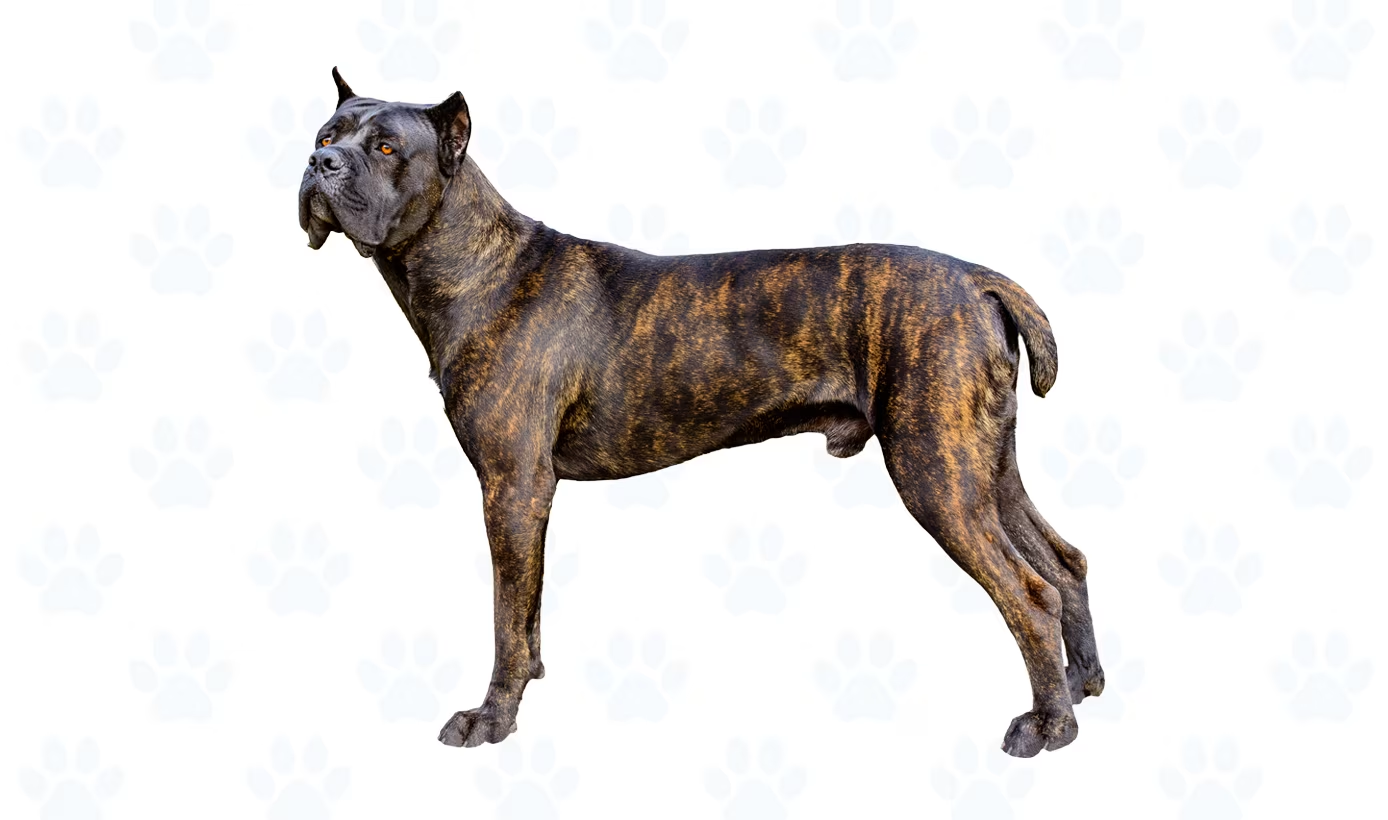
The Cane Corso is closely related to the Mastiff family of European working dogs. You know it’s a Cane Corso when you see the giant, boxy and imposing head with a powerful body. Their skin is thin and not too tight to the body. One look at a Cane Corso, and you’ll understand why they were used as war dogs or members of an ancient hunting party. They usually have docked tails around the fourth vertebra.
The American Kennel Club recognizes seven coat colors: black, black brindle, chestnut brindle, fawn, gray, gray brindle, and red. Other colors may exist, but those dogs are not eligible for competition. The AKC also lists two standard markings: black masks and gray masks.
Use the arrow keys to switch between coat color examples.
Size & Weight
Cane Corso puppies are small and cute, but they quickly grow into large adult dogs. Mature males can weigh up to 120 pounds, and they can grow to be over two feet tall at the shoulders.
Full Grown
Female
26 in. / 100 lbs.
Male
28 in. / 120 lbs.
Height is measured up to the shoulders.
Characteristics
- Size & Coat
- Lifestyle
- Training & Behavior
How to Care for a Cane Corso
The Cane Corso requires consistent care that supports their physical strength, intelligence, and protective nature. From exercise and nutrition to training, grooming, and preventive health, a thoughtful routine helps this powerful breed stay balanced and well-adjusted.
Cost of Owning
Savings & Rewards
Unlock exclusive rewards with Petco Perks. Plus, members get 35% off their first Autoship order and 5% off all future orders.

Enjoy exclusive rewards on expert rated and pet parent approved products, like member prices, extra points and special offers designed to help you save on what your pet needs.

Get your pet’s essentials delivered on your schedule so you never run out and save up to 35% on your first order, then 5% on every order after that.
Your love story starts here.
Find adoptable pets near you with a simple search.
Fun Facts
The Cane Corso nearly went extinct by the 1970s. A concerted breeding effort brought them back from the brink. Today, the breed’s popularity continues to grow in Europe and North America.
The name Cane Corso comes from two Latin words: canus (dog) and cohors (close space). Together, they formed a phrase that took the meaning of bodyguard dog.
Many celebrities proudly owned Cane Corsos. Movie star Vin Diesel has owned several, along with many other actors, sports figures, and politicians.
History
The Cane Corso comes from a long line of Roman war dogs. They are technically an Italian Molosser, a close cousin of the Neapolitan Mastiff (another large Italian dog). Roman soldiers used the dogs as cattle herders, hunting dogs, carters, and drovers. They also found work as guard dogs and social companions for the troops out in the field.
The Cane Corso managed to survive many centuries after the fall of the Roman Empire. As rural life evolved and mechanized farming took hold, the Cane Corso transitioned primarily into a hunting and companion animal. The Italian Kennel Club didn’t recognize the breed until 1994. It later earned a place in the French club in 1997 and recently in the AKC in 2010.