


Two Easy Ways to Start Earning Rewards!
Become a member today! Members-only pricing and offers, personalized care notifications, Vital Care points back on every purchase and more!
 Become a credit card member today!
Earn 2X Pals Rewards points at Petco
when you use Petco Pay!APPLY NOWLearn More About Petco Pay Benefits
Brittany
Updated on June 17, 2025


The Brittany is an athletic, nimble French gundog with a sweet disposition and sharp intelligence. Eager to please and quick to bond, this medium-sized companion thrives with active families ready to nurture their skills with patience and love.
Temperament
Loyal, Intelligent, Sensitive
Colors
Black, Red, Brown, Liver
 WEIGHT
30 – 40 Pounds
 HEIGHT
17 – 20 Inches
 LIFE EXPECTANCY
12 – 14 years
Maintenance Level
Low Maintenance
High Maintenance
Friendliness
Reserved
Extroverted
About Brittany
This athletic and nimble dog is a pleasure to own. Brittanys come from France, and they traditionally worked in the fields as gundogs. Brittanys can "point" and retrieve a variety of hunted animals. They have a solid body with a compact build. Most members of the breed are sweet dogs with high intelligence and an eagerness to please. Brittanys can be very sensitive, but they are loyal and loving dogs for any owner willing to develop their skills and manners.
Origin: France
Other Names: Brittany Spaniel, Brittany Wiegref, Epagneul Breton, French Brittany
AKC Sporting Group
Naturally active and alert, Sporting dogs make likeable, well-rounded companions. Dog breeds in the Sporting group are usually remarkable for their instincts in water and woods, and many of these breeds actively continue to participate in hunting and other field activities. Potential owners of Sporting dogs need to realize that most require regular, invigorating exercise.
Breed Appearance
The Brittany breed is characterized by their floppy ears, short tails, and excellent physique built for hunting trips through the forest. They don't have a heavy coat, but their fur is dense. The AKC recognizes seven coat colors in competition: liver & white, liver roan, liver white & orange, orange & white, orange roan, white & liver, and white & orange. For markings, the AKC lists three permissible standard markings: roan, spotted, and ticked.
Use the arrow keys to switch between coat color examples.
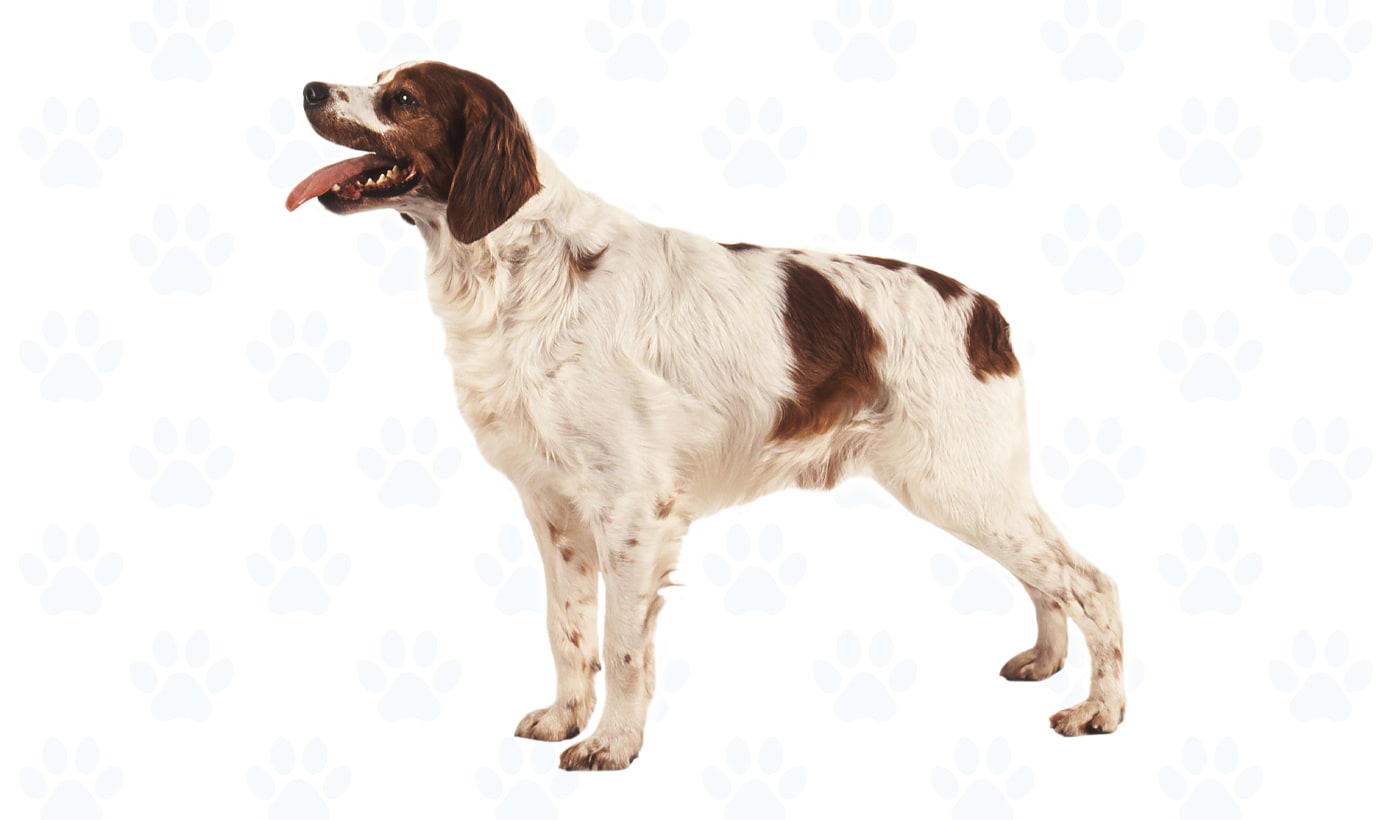
Size & Weight
Brittanys are powerful dogs in a medium-sized frame. They usually weight between 30 and 40 pounds with a height of 17-20 inches at the shoulder.
Full Grown
Female
17 in. / 30 lbs.
Male
20 in. / 40 lbs.
Height is measured up to the shoulders.
Breed Characteristics
- Size & Coat
- Lifestyle
- Training & Behavior
How to Care for a Brittany
Setting your Brittany up for a happy, healthy life starts with understanding their unique needs across grooming, training, health and nutrition. Explore the essentials below to support the exercise and lifestyle this spirited companion thrives on.
Cost of Owning
Savings & Rewards
Unlock exclusive rewards with Petco Perks. Plus, members get 35% off their first Autoship order and 5% off all future orders.

Enjoy exclusive rewards on expert rated and pet parent approved products, like member prices, extra points and special offers designed to help you save on what your pet needs.

Get your pet’s essentials delivered on your schedule so you never run out and save up to 35% on your first order, then 5% on every order after that.
Your love story starts here.
Find adoptable pets near you with a simple search.
Fun Facts
Brittany enthusiasts fought a long battle to drop the "Spaniel" from the official breed name. The AKC referred to the breed as Brittany Spaniels up until 1982. The winning argument was the dissimilarity of the Brittany's hunting style to that of a traditional spaniel dog.
Some Brittanys are able to track a wounded animal – a useful skill for any game hunting companion. They have a good sense of smell and a body capable of tracking prey for hours.
Although the breed is named after a region of France, the breeding line came from a group of wealthy English hunters who tended to leave their hunting dogs behind with their French staff when they went back home at the end of the hunting season. For some reason, the name Brittany won out over "Actually English but Lives in Brittany."
During World War II, professional dog breeding became difficult if not impossible. After the war, the French breeding community was forced to allow black spotted Brittanys into the official ranks of the Brittany. Most kennel clubs accept black spots, but they remain disqualified from American and Canadian clubs.
History
The earliest records of Brittanys came in the form of paintings and woven tapestries from the 1600s. Small liver and white dogs featured prominently in many works. The modern incarnation of the Brittany breed came in the 1800s in Brittany, France. Two hunters, one French and one English, bred their two favorite hunting dogs to create the forefather of the Brittany line. As dog shows grew in popularity into the 1900s, the Brittany often found success in competition. The first breed recognition came in France in 1908.
The Brittany came to America in 1931 and became an instant hit with dog owners. The breed won recognition with the AKC in 1934. Shortly after, the American Brittany Club formed in 1942 with a new American standard based largely on the French Brittany of the day.