


Two Easy Ways to Start Earning Rewards!
Become a member today! Members-only pricing and offers, personalized care notifications, Vital Care points back on every purchase and more!
 Become a credit card member today!
Earn 2X Pals Rewards points at Petco
when you use Petco Pay!APPLY NOWLearn More About Petco Pay Benefits
Bouvier des Flandres
Updated on June 17, 2025


Often called "Gentle Giants," the Bouvier des Flandres is intelligent, sweet-natured, and hardworking. This powerful yet graceful breed makes a devoted family companion, especially in homes with children.
Temperament
Intelligent, Sweet-natured, Hardworking
Colors
Black, Fawn, Brindle, Grey, Blonde
 WEIGHT
60 – 120 Pounds
 HEIGHT
22 – 28 Inches
 LIFE EXPECTANCY
10 – 12 years
Maintenance Level
Low Maintenance
High Maintenance
Friendliness
Reserved
Extroverted
About Bouvier des Flandres
While their name may sound snooty, the Bouvier des Flandres is anything but. Often called 'Gentle Giants' by their adoring fans, Bouviers are intelligent, sweet natured, and hardworking dogs that make great additions to any family, especially those with children.While their name may sound snooty, the Bouvier des Flandres is anything but. Often called 'Gentle Giants' by their adoring fans, Bouviers are intelligent, sweet natured, and hardworking dogs that make great additions to any family, especially those with children.
Origin: Belgium
Other Names: Cow Herder of Flandres, Toucheur de Boeuf, Vlaamse Koehond
AKC Herding Group
The Herding Group, created in 1983, is the newest AKC classification; its members were formerly part of the Working Group. All breeds share the remarkable ability to control the movement of other animals, like the low-set Corgi that can drive cattle many times its size by nipping at their heels. Most Herding dogs never see a farm, yet instinct often prompts them to gently herd their families, especially children. These intelligent dogs make excellent companions and respond well to training.
Breed Appearance
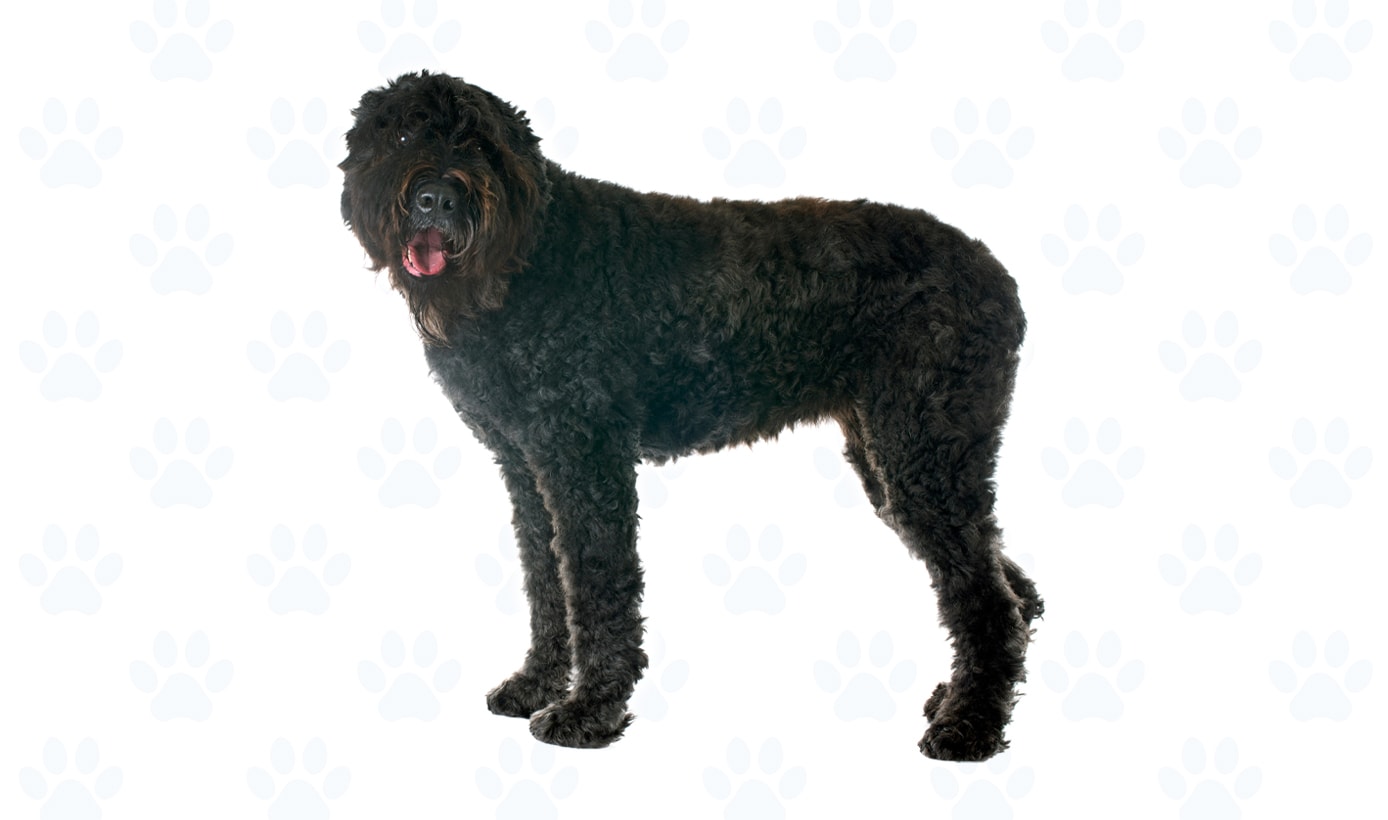
Bouvier des Flandres are powerfully built, rough-coated dogs. They are large and strong, but are surprisingly graceful. The Bouvier's most notable feature is his impressive head, complete with a heavy beard and mustache. Their coats are generally cropped quite short to their bodies, with shaggy hair left around the eyes and mouth. Bouviers used to have their tails docked to prevent injury on farms, and it eventually became a cosmetic preference among breeders and owners of show dogs. Now the practice is outlawed in many places and their large tails are left as nature intended. The most popular color for this breed is black, or black with white accents, but Bouviers also come in fawn, brindle, grey, or blond.
Use the arrow keys to switch between coat color examples.
Size & Weight
Bouviers des Flandres are famously large dogs, with some males of the breed reaching two and a half feet at the shoulders and weighing in at 120 pounds. The weight for the Bouvier typically varies between 60 and 80 pounds for females and a whopping 80 to 120 pounds for males. The height for the breed ranges from 22 to 28 inches at the withers (shoulders)
Full Grown
Female
22 in. / 80 lbs.
Male
28 in. / 120 lbs.
Height is measured up to the shoulders.
Breed Characteristics
- Size & Coat
- Lifestyle
- Training & Behavior
How to Care for a Bouvier des Flandres
Caring for your Bouvier des Flandres means staying on top of grooming, training, and health needs while supporting their nutrition, exercise, and active lifestyle. Use the guide below to keep your gentle giant happy and thriving.
Cost of Owning
Savings & Rewards
Unlock exclusive rewards with Petco Perks. Plus, members get 35% off their first Autoship order and 5% off all future orders.

Enjoy exclusive rewards on expert rated and pet parent approved products, like member prices, extra points and special offers designed to help you save on what your pet needs.

Get your pet’s essentials delivered on your schedule so you never run out and save up to 35% on your first order, then 5% on every order after that.
Your love story starts here.
Find adoptable pets near you with a simple search.
Fun Facts
The Bouvier des Flandres tail and ears were originally docked and cropped to prevent injury while working, but were also ways to indicate that the dog was working stock, and not a pet subject to taxation.
President Ronald Reagan and First Lady Nancy Reagan owned a rather famous and spirited Bouvier called Lucky while they lived in the White House.
History
It is believed that the Bouviers that we know and love today are the descendants of dogs bred for farm work by monks in Medieval Flandres. This principality encompassed what is now modern day France, Belgium, and The Netherlands. It's thought that the early breeders crossed Irish Wolfhounds and Scottish Deerhounds with local farm dogs to get what would eventually be a hearty, strong and loyal work companion.
By the start of the 20th century people were starting to take notice of this striking breed. Unfortunately with the outbreak of the First World War, the Bouvier des Flandres breed was almost completely wiped out due to battles fought on former farms, which displaced whole farming communities, causing their dogs to become lost or destroyed. It was the Belgian army that kept the breed alive, as they proved to be invaluable and courageous service dogs, locating wounded soldiers and pulling wheeled stretchers. In peace time, they expanded their resumes as police and seeing eye dogs.
The Second World War almost saw the breed extinct again, but European immigrants brought the breed to North America and solidified its popularity abroad. The American Bouvier des Flandres Club was founded in 1963.