


Two Easy Ways to Start Earning Rewards!
Become a member today! Members-only pricing and offers, personalized care notifications, Vital Care points back on every purchase and more!
 Become a credit card member today!
Earn 2X Pals Rewards points at Petco
when you use Petco Pay!APPLY NOWLearn More About Petco Pay Benefits
Basset Hound Breed Facts and Information
Updated on June 17, 2025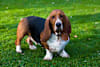


Basset Hounds are short-legged scent hounds with a powerful nose and a laid-back personality. Known for their long ears and soulful expression, they are friendly companions who enjoy family life and moderate daily walks.
TEMPERAMENT
Friendly, Playful, Affectionate
COLORS
Tan, Tri-Color, Red
 WEIGHT
55 – 75 Pounds
 HEIGHT
12 – 15 Inches
 LIFE EXPECTANCY
11 – 12 years
Maintenance Level
Low Maintenance
High Maintenance
Friendliness
Reserved
Extroverted
About Basset Hound
Basset Hounds are a short-legged hound bred for scent-smelling and hunting hare. After their cousin the Bloodhound, Bassets are the next best tracking dogs with a renowned sense of smell. As companions, they are friendly and make good family pets. Basset Hounds are typically outgoing, charming, and playful animals.
Origin: France Other Names: Hush Puppy, Basset Hound Group
Hound Group
Most hounds share the common ancestral trait of being used for hunting.
Breed Appearance
The American Kennel Club (AKC) recognizes 9 coat colors in Basset Hounds: black & white, black brown & white, black tan & white, black white & brown, black white & tan, brown black & white, lemon & white, mahogany & white, and red & white. Some other varieties include blue and other color combos, but the nine standard colors are the basis for competitive events. The Basset Hound coat is smooth and short with a close cut. Many Bassets have an H-shaped mask of color on their heads, and most mixed colors show up as patches on the head and body generally.
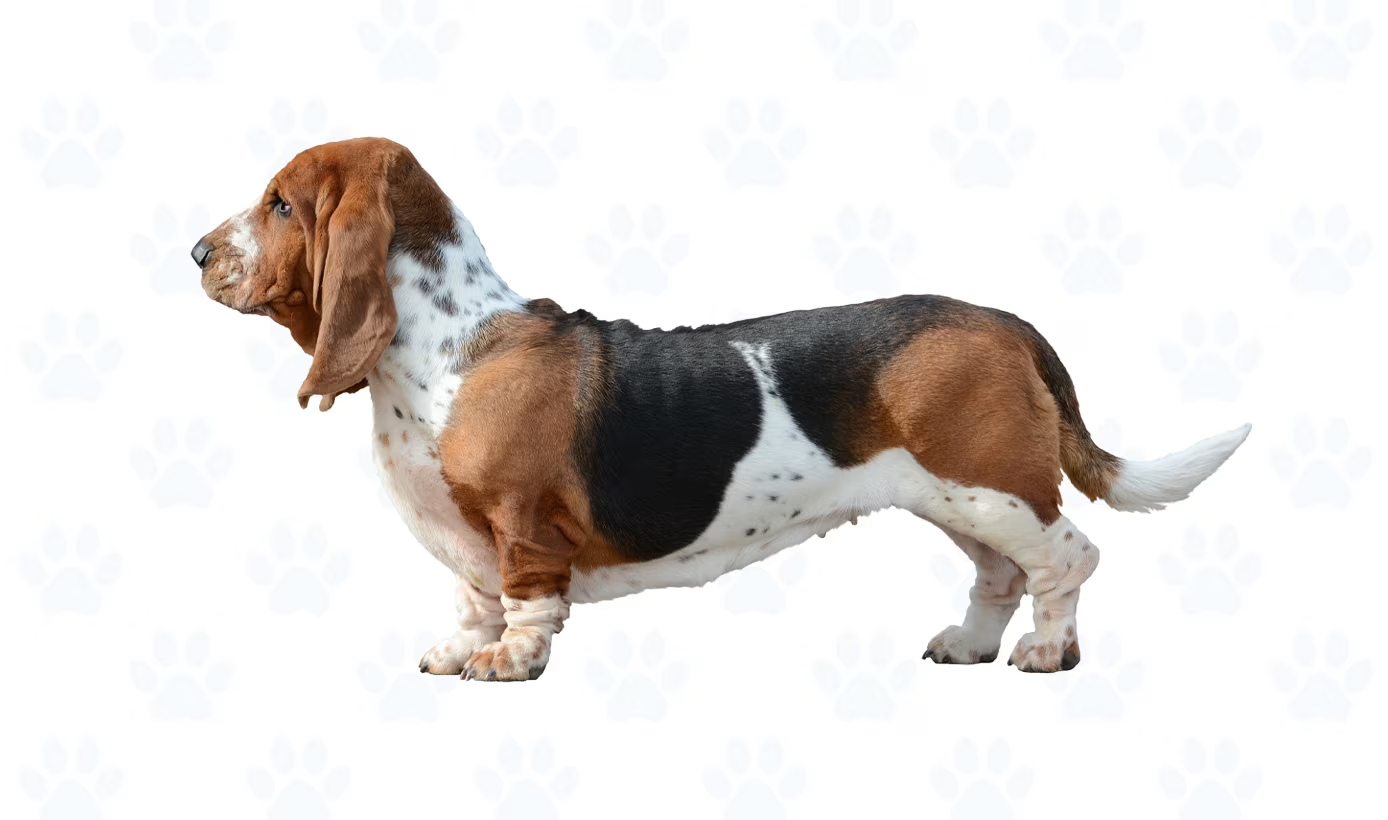
The name Basset comes from a French phrase meaning low and small. This characterization describes the breed very well. Basset Hounds are stocky with big heads and very short legs. Their large ears hang down to help them “cup” the scents that pique their interest. Their tails are often long and held high level with the top of the head.
Use the arrow keys to switch between coat color examples.
Size & Weight
Basset Hounds are medium-sized dogs, built low to the ground. Most adult males weight between 55 and 75 pounds. They only grow to be 12-15 inches tall at the shoulders (withers). Basset Hounds carry most of their weight in their skeleton and heavy head.
Full Grown
Female
12 in. / 55 lbs.
Male
15 in. / 65 lbs.
Height is measured up to the shoulders.
Breed Characteristics
- Size & Coat
- Lifestyle
- Training & Behavior
How to Care for a Basset Hound
Caring for a Basset Hound involves balancing regular grooming, patient training, proper nutrition, and routine exercise with attention to health needs and a lifestyle that supports their relaxed, social nature.
Cost of Owning
Savings & Rewards
Unlock exclusive rewards with Petco Perks. Plus, members get 35% off their first Autoship order and 5% off all future orders.

Enjoy exclusive rewards on expert rated and pet parent approved products, like member prices, extra points and special offers designed to help you save on what your pet needs.

Get your pet’s essentials delivered on your schedule so you never run out and save up to 35% on your first order, then 5% on every order after that.
Your love story starts here.
Find adoptable pets near you with a simple search.
Fun Facts
They may look a little funny, but those floppy Basset Hound ears are purpose-built.
Along with their dewlap (folds under the chin), their big ears help to waft and carry smells to their snout.
Basset Hounds make great politicians. The town of Concord, ON in Canada elected two dogs to the office of Mayor. Along with her Great Dane co-mayor, a Basset named Victoria presided over parades and other events in support of “the lives of all canines and the anti-squirrel movement.” You can’t make this stuff up!
Basset Hounds love the shoreline and the sandy beaches of the world, but don’t mistake that for a love of the water. Their short legs and heavy torso make them poor swimmers. Deep water represents a real danger to your pet.
History
The Basset Hound began as part of the St. Hubert Hound, a famous breed from Belgian monks active around the year 1000 AD. These hounds descended from Laconian or Spartan Hounds from the Mediterranean, a breed known for its legendary tracking abilities. The first mention of a Basset Hound appears in a French hunting text from 1585 in a section regarding fox and badger tracking. The Basset breed likely broke off as a mutation from the Norman hounds seen around France and England in the middle of the millennium.
The Basset Hound lived mostly in France until introduction to England in the 1870s. As its popularity rose as a rabbit (or hare) hunting breed, many Brits came to love the dog for its working abilities and charming personality. The first British breed standard came in the late 19th century, followed much later by the AKC in 1935.