


Two Easy Ways to Start Earning Rewards!
Become a member today! Members-only pricing and offers, personalized care notifications, Vital Care points back on every purchase and more!
 Become a credit card member today!
Earn 2X Pals Rewards points at Petco
when you use Petco Pay!APPLY NOWLearn More About Petco Pay Benefits
American Pit Bull Terrier
Updated on June 17, 2025




Learn about the American Pit Bull Terrier’s loyal personality, exercise needs and care. Discover if this energetic, affectionate breed is right for you.
Temperament
The American Pit Bull Terrier is a strong, affectionate
Colors
Black, White, Blue, Red, Fawn, Brindle
 WEIGHT
50 - 80 Pounds
 HEIGHT
16 - 19 Inches
 LIFE EXPECTANCY
12 Years
Maintenance Level
Low Maintenance
High Maintenance
Friendliness
Reserved
Extroverted
About American Pit Bulls
While the term “Pit Bull” conjures a specific image in many dog lover’s heads, the Pit Bull is not an "official" breed. Most people consider the Pit Bull to be more of a “type” of dog, and include breeds such as the American Staffordshire Terrier, the American Pit Bull and the Staffordshire Bull Terrier in this group. The term “Pit Bull” unfortunately has acquired a negative connotation, as several cities and municipalities in the United States and Canada have enacted bans on these types of dogs out of concern for increased aggression in the breed. The inability to definitively visually identify any one dog as a “Pit Bull” calls these concerns into question, however, and dogs of the Pit Bull type can make wonderful family dogs, as well as serve faithfully as police dogs, service dogs for the handicapped, and therapy dogs.
Origin: England, 19th c. Other Names: American Pit Bull, APBT, Pittie, Pit Bull
Terrier Breed Group
Terriers are known for their bold, spirited personalities and low tolerance for other animals, a trait rooted in their history as vermin hunters. Many still show a feisty attitude and eagerness for debate. Their wiry coats require specialized grooming called stripping to maintain their classic look. Terriers make engaging companions but do best with owners who can match their lively, determined nature.
Breed Appearance
Pit Bull-type dogs typically have a powerful, blockish head with pronounced masseter (cheek) muscles that unfortunately have historically contributed to their use as fighting dogs. Their necks are thick and well-muscled, and lead to a powerful, deep chest. Pit Bulls are stocky dogs with powerful bodies and strength that exceeds their size.
The UKC’s breed standards specify that these dogs have a medium-length head with a broad, flat skull and wide muzzle. The ears are small and wide set. The ears of these dogs have traditionally been cropped, however this practice has fallen out of fashion as it has no practical purpose and inflicts unnecessary pain. The tail is long and tapers to a point. The coat is short, and comes in nearly every color of the rainbow!
Use the arrow keys to switch between coat color examples.
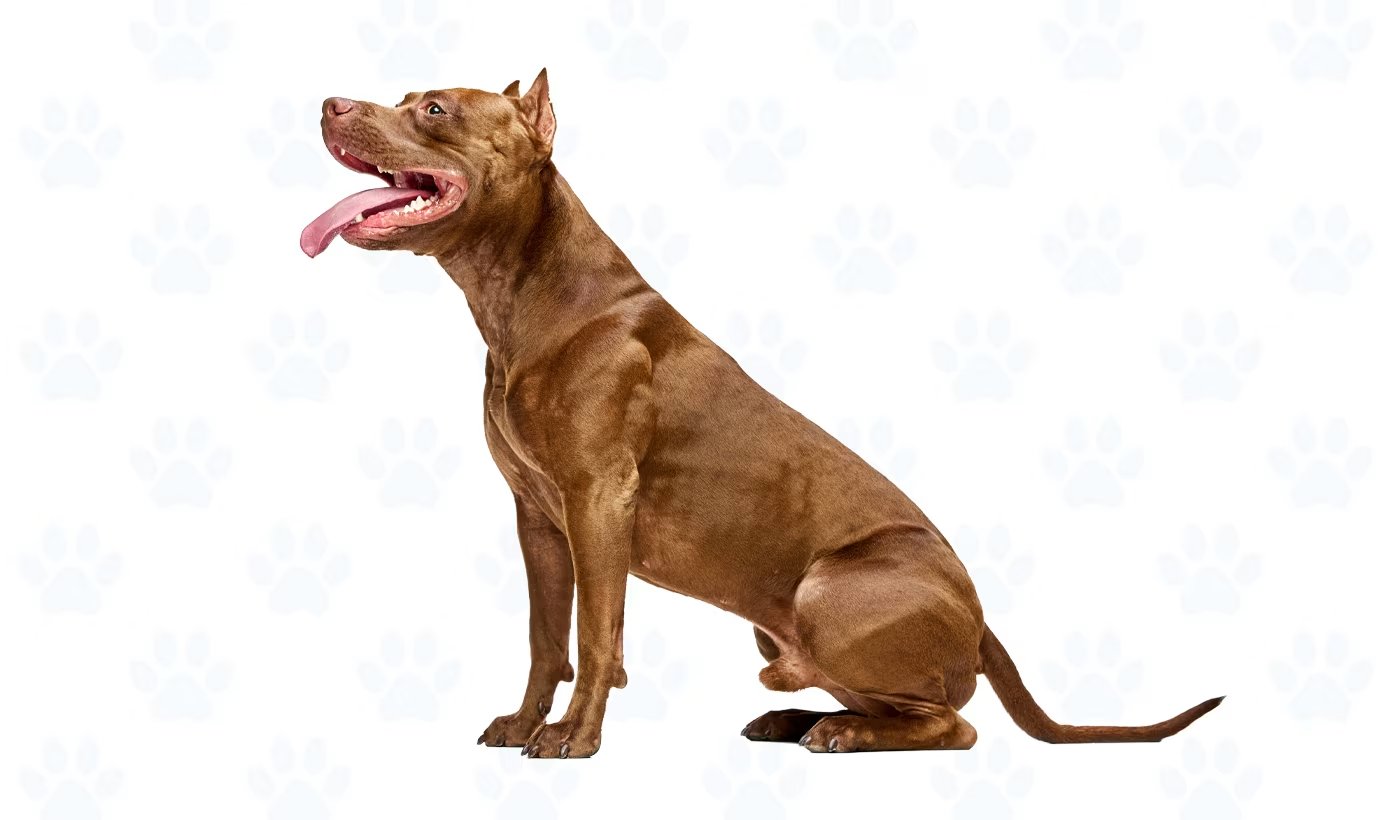
Size & Weight
Males typically stand 17 to 19 inches and weigh 50 to 80 pounds. Females are normally smaller: they stand 16 to 17.5 inches and weigh 30 to 60 pounds.
Full Grown
Female
16 in. / 45 lbs.
Male
19 in. / 70 lbs.
Height is measured up to the shoulders.
Characteristics
- Size & Coat
- Lifestyle
- Training & Behavior
How to Care for an Americal Pit Bull
Caring for an American Pit Bull Terrier includes consistent training, regular exercise and a balanced diet to support their strength and energy. With routine grooming and plenty of mental stimulation, they can thrive as well-rounded companions.
How to Care
Cost of Owning
Savings & Rewards
Unlock exclusive rewards with Petco Perks. Plus, members get 35% off their first Autoship order and 5% off all future orders.

Enjoy exclusive rewards on expert rated and pet parent approved products, like member prices, extra points and special offers designed to help you save on what your pet needs.

Get your pet’s essentials delivered on your schedule so you never run out and save up to 35% on your first order, then 5% on every order after that.
Your love story starts here.
Find adoptable pets near you with a simple search.
Fun Facts
A Pit Bull-type dog called Banddog Dread holds more working dog titles than any other dog of any breed.
Contrary to what many believe, Pit Bulls do not possess “locking jaws.” Like any terrier they can be seen to bite, clench, and hold, and at times refuse to release, but there is no physiologic locking mechanism in the jaws of a Pit Bull or any other dog.
The ASPCA (American Society for the Prevention of Cruelty to Animals) has cited both over-reporting and false reporting of attacks as factors that have contributed to the negative public perception of Pit Bull-type dogs.
Popsicle, a 5 month-old Pit Bull-type puppy that was found nearly dead in a freezer, went on to become one of the U.S.’s most important police dogs.
History
The Pit Bull traces its origins back to 19th century England, when dog lovers started to try to breed a dog that incorporated the gameness of the Terrier with the strength of the Bulldog. The resulting dog possessed many wonderful traits, including bravery, loyalty, strength, and gentleness with loved ones. It’s believed that immigrants brought these bulldog/terrier mixes to America. Farmers became interested in the many desirable working qualities of these dogs, and began to use them for catching semi-wild cattle and pigs, for hunting, driving livestock, and as family dogs.
The American Kennel Club does not recognize the Pit Bull as a breed, but the dogs have been recognized by the United Kennel Club since 1898 when its founder, C.Z. Bennett, registered his own Pit Bull, “Bennett’s Ring.”