


Two Easy Ways to Start Earning Rewards!
Become a member today! Members-only pricing and offers, personalized care notifications, Vital Care points back on every purchase and more!
 Become a credit card member today!
Earn 2X Pals Rewards points at Petco
when you use Petco Pay!APPLY NOWLearn More About Petco Pay Benefits
Alaskan Malamute
Updated on June 17, 2025


Powerful and striking, the Alaskan Malamute is a devoted working breed built for endurance and cold climates. Originally bred to haul heavy loads across Arctic terrain, they thrive with active families who can match their strength, intelligence and need for purpose.
Temperament
Independent, Loyal, Energetic
Colors
Black, Gray, Red, Sable, Agouti, Silver
 WEIGHT
75 - 85 Pounds
 HEIGHT
23 - 25 Inches
 LIFE EXPECTANCY
10 - 14 Years
Maintenance Level
Low Maintenance
High Maintenance
Friendliness
Reserved
Extroverted
About Alaskan Malamutes
Malamutes developed under the care of the Malemiut Inupiaq people in what is now Alaska. They worked as sled dogs, guardians, and hunters, developing close ties with their human masters. Today, Malamutes are treasured worldwide for their cheerful, hardworking disposition and striking, wolf-like appearance.
Working Group
Working Group dogs have been invaluable assets to man throughout the ages. The Doberman Pinscher, Siberian Husky and Great Dane are included in this Group, to name just a few. Quick to learn, these intelligent, capable animals make solid companions. Their considerable dimensions and strength alone, however, make many working dogs unsuitable as pets for average families. And again, by virtue of their size alone, these dogs must be properly trained.
Breed Appearance
Malamutes should have powerful, muscular bodies, suggestive of their traditional job as sled dogs. They should have a broad head, triangular ears that stand up alertly, and dark eyes. Their tails are bushy, and are carried over the back.
The AKC recognizes 9 colors for the Malamute. Their coat can take on various combinations of agouti, red, sable, white, blue, black, grey, seal, and silver coloring. Black markings and a grey mask on the face are acceptable. The coat should be thick and coarse, not long and soft.
Use the arrow keys to switch between coat color examples.
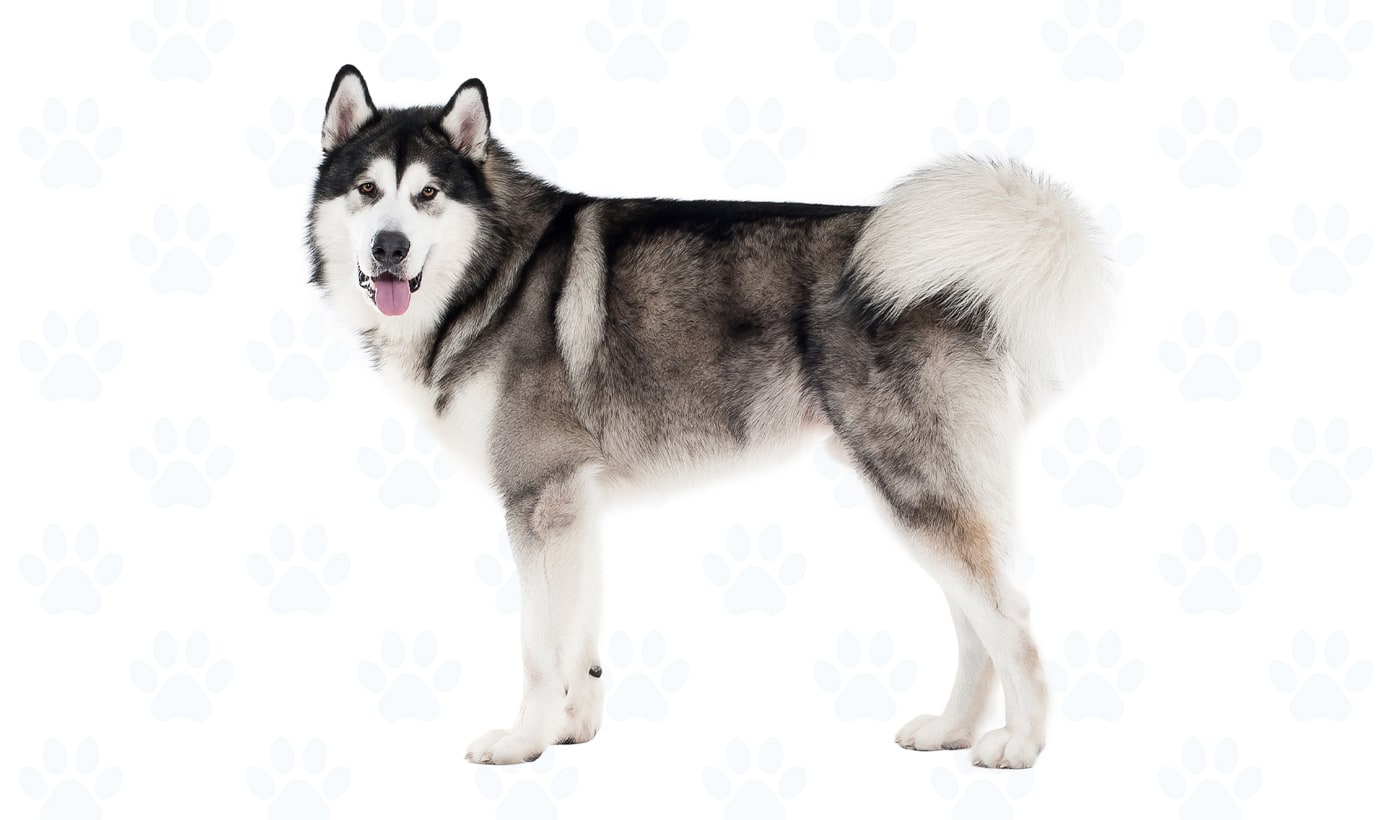
Size & Weight
Alaskan Malamutes are large dogs. Male Malamutes are usually around 25 inches tall at the shoulders and weigh around 85 pounds. Females are usually around 23 inches tall and weigh 75 pounds.
Full Grown
Female
23 in. / 75 lbs.
Male
25 in. / 85 lbs.
Height is measured up to the shoulders.
Characteristics
- Size & Coat
- Lifestyle
- Training & Behavior
How to Care for an Alaskan Malamute
Caring for an Alaskan Malamute means committing to daily exercise, consistent training and routine coat maintenance to support their strength and stamina. With structure, companionship and purposeful activity, these devoted working dogs truly thrive.
Cost of Owning
Savings & Rewards
Unlock exclusive rewards with Petco Perks. Plus, members get 35% off their first Autoship order and 5% off all future orders.

Enjoy exclusive rewards on expert rated and pet parent approved products, like member prices, extra points and special offers designed to help you save on what your pet needs.

Get your pet’s essentials delivered on your schedule so you never run out and save up to 35% on your first order, then 5% on every order after that.
Your love story starts here.
Find adoptable pets near you with a simple search.
Fun Facts
A Malamute in harness can pull up to 3,000 pounds of weight.
The Alaskan Malamute is the Official State Dog of Alaska.
Admiral Byrd used Malamutes on his famous Antarctic expeditions in the 1930’s.
History
Origin: United States
The early history of the Malamute breed goes back thousands of years to the dogs that accompanied humans when they first crossed the Bering Strait to the Americas. There are genetic similarities between Malamutes, Siberian Huskies, and Alaskan Huskies, suggesting shared ancestors deep in the past.
The first Malamutes were the dogs of the Malemiut Inupiaq people of what is now the Norton Sound region of Alaska. These dogs pulled sledges, helped to hunt seals, and protected their masters from other animals. During the gold rush of 1896, Europeans brought many of their own breeds to the far north and also became fascinated with the powerful dogs of the local people. Interbreeding during this time greatly diluted the Malamute lineage.
In the early 1900’s, enthusiasts like Arthur Walden, Paul Voelker Milton, and Eva Seeley began breeding Malamutes in earnest. The American Kennel Club recognized the breed in 1935, the same year that the American Malamute Club was founded.