Two Easy Ways to Start Earning Rewards!
Earn 2X Pals Rewards points at Petco
when you use Petco Pay!
Learn how to pick the right aquarium plants, substrate, lighting, and fertilizers to ensure that your aquarium plants thrive and stay healthy.
Updated on July 17th, 2026
Search Petco to learn about blackwater fish aquariums. We want to help you decide what lifestyle is best for your unique fish.
Updated on June 19th, 2026
Learn how to safely handle your aquatic life to avoid toxin & bacterial exposure. Find aquatic life care supplies at your neighborhood Petco pet care center.
Updated on October 23rd, 2025
Learn how to care for brackish water fish, recommended diet & aquarium setup. Find the right food, supplies & equipment at your neighborhood Petco.
Updated on April 9th, 2026
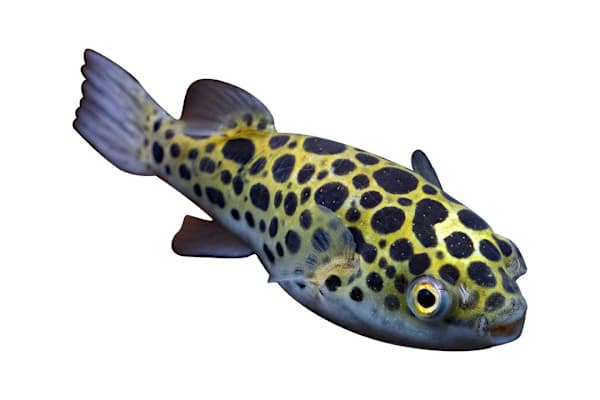
Find expert care tips for freshwater and brackish puffers, including tank setup, diet, and maintenance to keep your fish thriving.
Updated on April 9th, 2026
Sand substrate is always a problem as it promotes decay and anaerobic bacteria. If you need sand in a tank for a fish species (none of the ones you mentioned above actually need sand) you should not use it in the whole aquarium , but only in a small spot to accomodate the fish. Rust-colored spots on the glass and gravel are due to diatom algae. They likely were brought in with the silicates in the sand.Diatom algae need the silicates to make a shell they carry around with them. Remove the silicates, and the algae should die. Removing silicates can be done with a silicate and phosphate filter, or, in your case, I would remove the sand completely and refill your aquarium with washed gravel. Algae also need lots of nutrients, so if you overfeed your fish, algae will increase. Feed only what your fish eat in one minute, no more.
Updated on September 24th, 2025
As a short term bath of up to seven days and a concentration of up to 1 tablespoon/ 1gal water can be used but this is just the fish as a treatment. You cannot add it to the daily aquarium as it will damage the plants and can damage the fish. Remember these are freshwater fish, not salt water.
Updated on September 24th, 2025
Check the water chemistry using a home test kit or submit a water sample for testing. The local Petco may do this for free or for a small fee. Aim for an absence (0 ppm) of ammonia and nitrites with nitrates at 20ppm or less. Perform partial water changes to stabilize chemistry and/or to improve water quality. Rinse the filter media in tank water, not tap water, and replace it. Use only conditioned water that is temperature matched to prevent stress or shock. To limit algae growth, maintain pristine water quality via filtration and regular water changes. If possible, turn up filter flow to keep water moving. If this stresses the fish though, do not do it. Do not overfeed and remove any uneaten food promptly. Limit lighting to 8 hours daily and closely monitor water temperature as well. All these can promote algae overgrowth.
Updated on September 24th, 2025
Goldfish are surface breathers so seeing them up at the top is not unusual. They are also very dirty fish, so I recommend getting a small pump for aeration and doing a partial water change. There is usually a period of cloudy water after establishing a new fish tank until the bacterial balance is established and stabilized in the tank. I also recommend getting a siphon--type tank cleaner so you can use it to clean the gravel as you remove some of the water. It acts as a vacuum to pull out all the fish poo that settles to the bottom, and the water you remove from the tank is a great thing to water any plants you have with, as it also fertilizes them. Remove no more than half of the tank's water and replace it with clean fresh water that has had the correct amount of water conditioner for the volume you're adding.
Updated on September 24th, 2025
He may have internal parasites. maintain pristine water quality and confirm stable water chemistry. This can be done by using a home test kit or by submitting a water sample for testing. The local Petco may do this for free or for a small fee. Perform a partial water change, no more than 30% total volume at a time, if indicated. use only conditioned water that is temperature matched to prevent further stress or shock. Check the water temperature as well, since low temps can affect activity, appetite and digestion in fish. Anywhere between 72 F and 80 F is acceptable. Keeping it at the higher end may aid in digestion and defecation. Consider a broad spectrum parasite medication. You can find one in the Aquarium section at the local Petco. Follow label directions carefully and remove the carbon filter insert during treatment if indicated.
Updated on September 24th, 2025