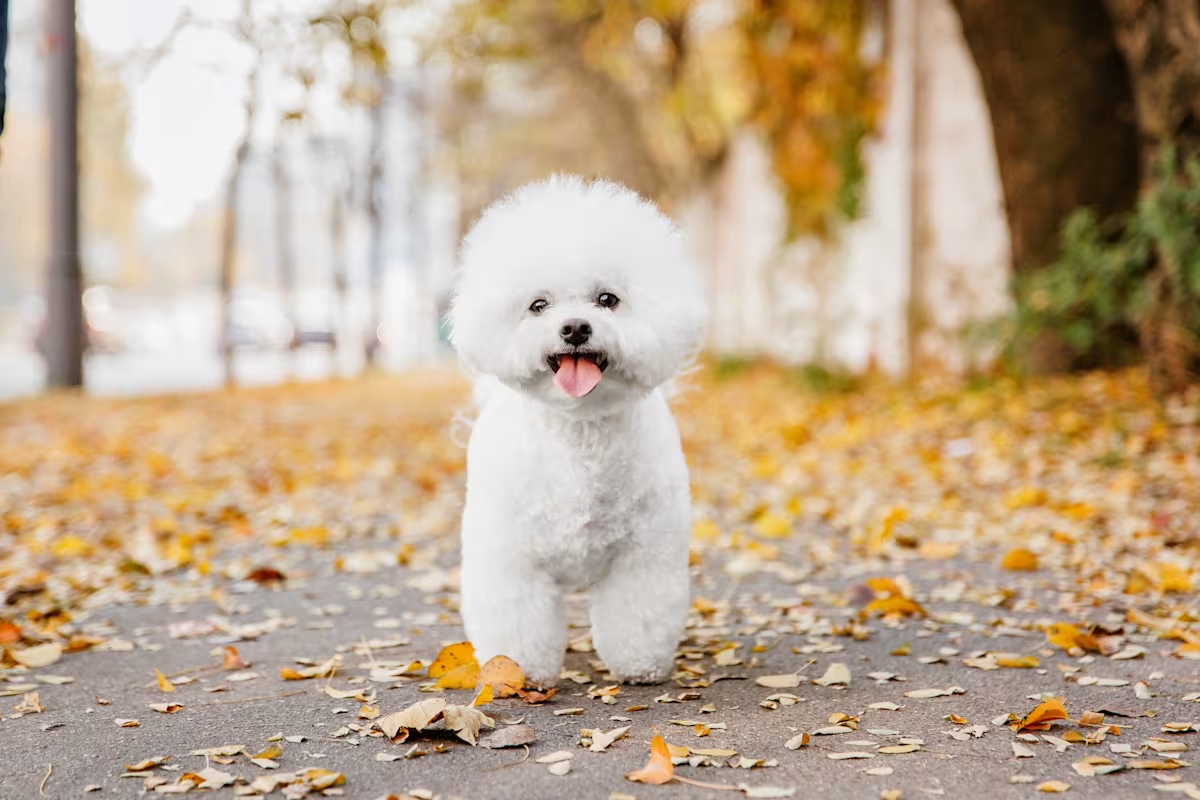
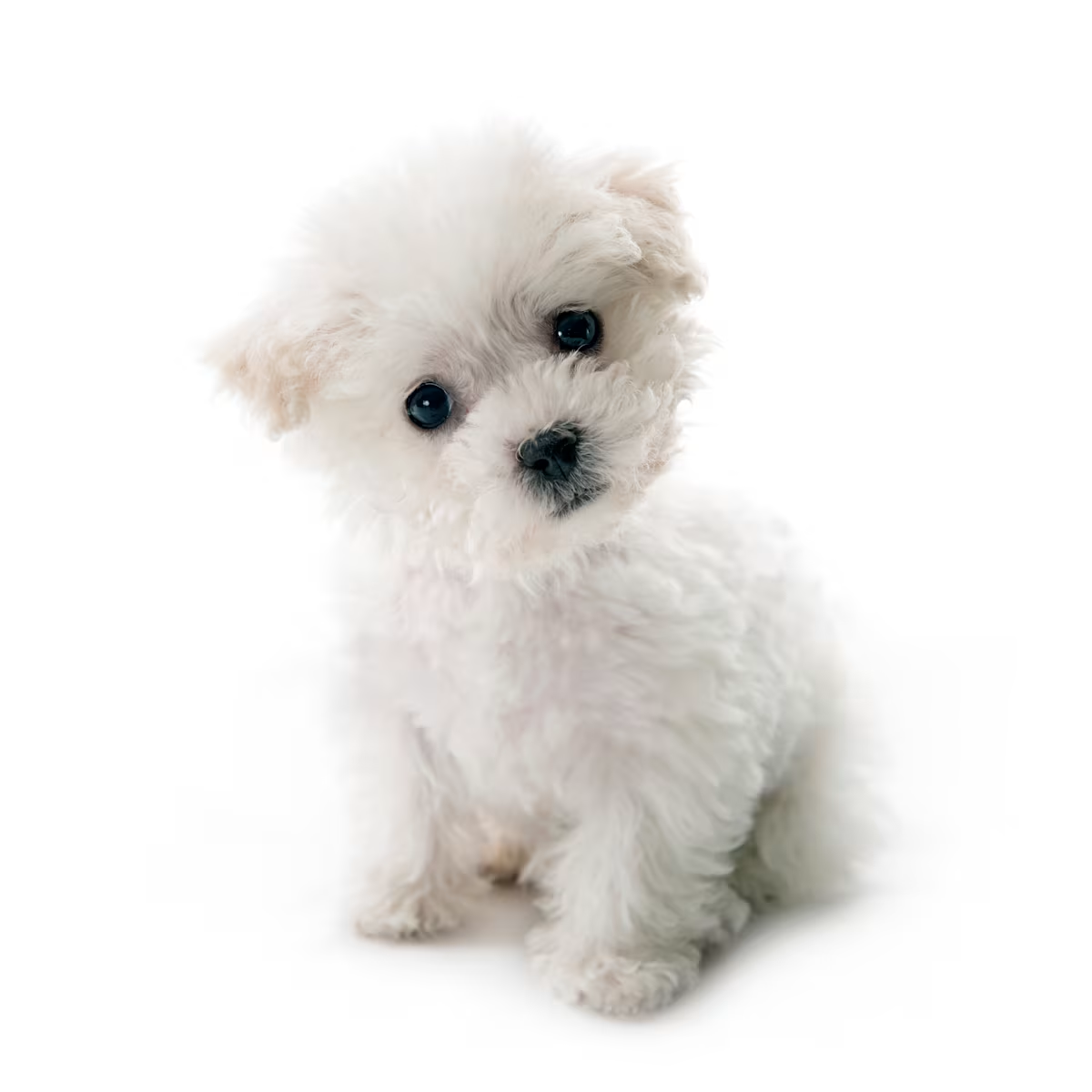
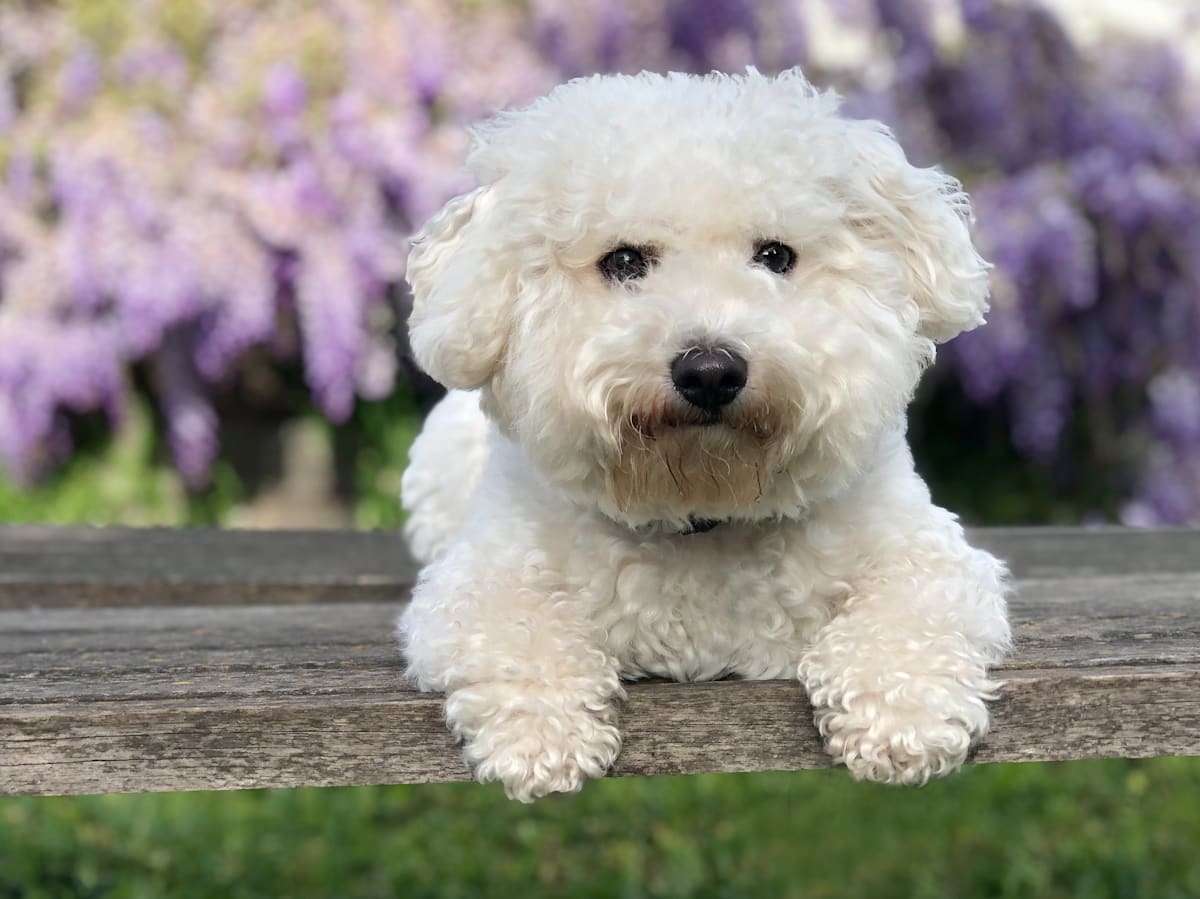
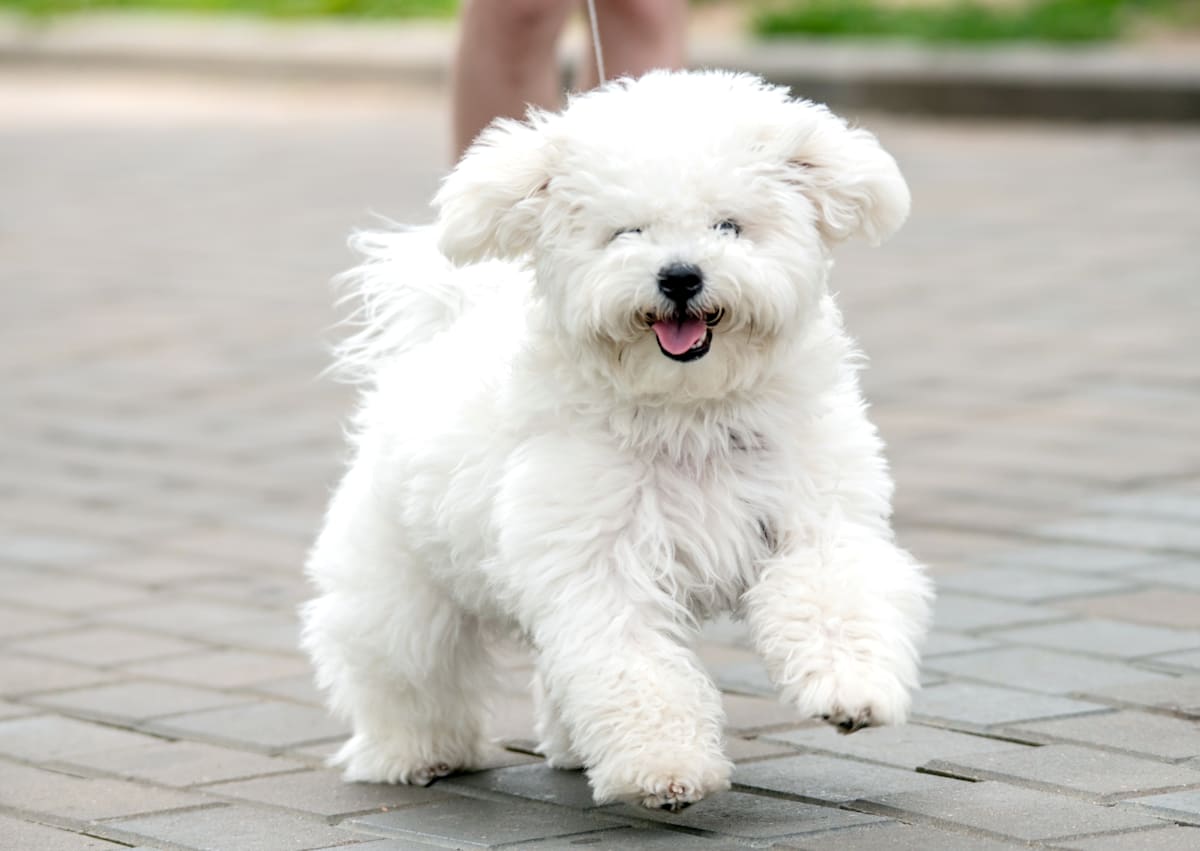
Training: Bichons Frises are considered a highly trainable breed. Plucky and agile, these little dogs love to entertain and leave a smile on your face. In fact, they were regularly employed in the circus in the 19th century. Although their capacities are high, they can be on the stubborn side. They would rather razzle-dazzle than get down to the dirty work of plain old obedience. When working with a Bichon, be sure to keep it fun and challenging.
Barking: Expect a Bichon Frise to bark. They will produce a range of vocalizations, including yapping, ‘talking’, and the least entertaining, barking. Their bark is high-pitched and grating—it’s important to teach them about appropriate vocalizations early on and employ other strategies to manage their tendencies. Long bouts of time alone can aggravate any potential issues with barking because of their tendency to experience separation anxiety.
Temperament & Behavior: Bichons are lively and thrive with attention. Some of the Bichon’s favorite activities include playing games, performing, cuddling, and looking out the window. They are an easy companion who is charming, sensitive, intelligent and loves to accompany their people in as many situations as possible. Because of their devotion, Bichons are prone to separation anxiety and should not be left alone all day, if at all possible.
Behavior with Kids: Bichons are usually playful and revel in the attention of children. The Bichon is still a small breed and not a good match for wrestling and rough-housing. As with any dog, be sure to supervise your Bichon around kids and unfamiliar adults.
Protection: While Bichons aren’t aggressive or even mildly intimidating, they are certainly capable of sounding the alarm. A high-pitched, relentless alarm.