Two Easy Ways to Start Earning Rewards!
Earn 2X Pals Rewards points at Petco
when you use Petco Pay!
When choosing a new aquarium or moving to a new home you’ll want to know the dimensions, weight, and size of your tank to plan accordingly.
Updated on June 19th, 2026

Small, AKA “Nano” tanks have grown in popularity over the past couple years and continue to gain momentum. Find out if a mini aquarium is right for you.
Updated on July 17th, 2026

Tanks with live plants can be excellent additions to your home, bringing a touch of nature indoors. Learn how to take care of aquatic plants.
Updated on November 6th, 2025
Search Petco to learn about blackwater fish aquariums. We want to help you decide what lifestyle is best for your unique fish.
Updated on June 19th, 2026
Learn how to care for freshwater community fish, recommended diet & aquarium setup. Find the right food, supplies & equipment at your neighborhood Petco.
Updated on April 9th, 2026
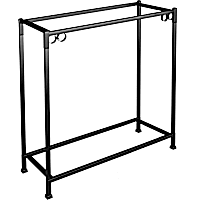
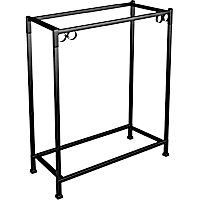
The width will limit the tank size. The largest tank would be a 25 gallon tank. If you choose this size, make sure the stand can support upwards of 300lbs. That is what the tank will weigh once filled and set up.
Updated on September 24th, 2025
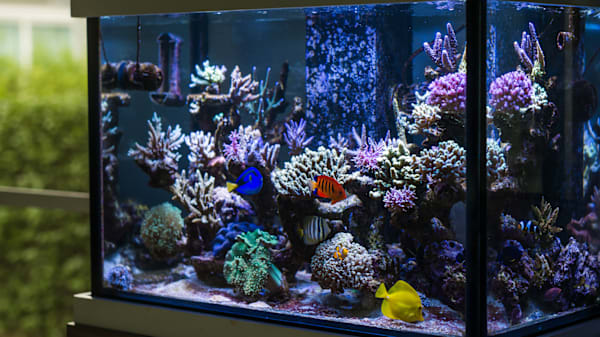
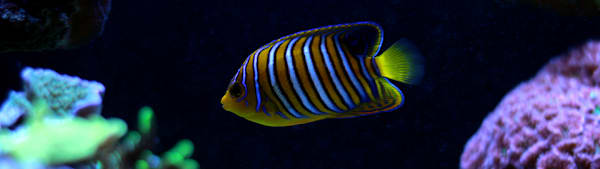
The Tang, Clownfish, and Chromis are marine fish requiring a saltwater aquarium while guppies are freshwater fish. These fish are not compatible as they require two completely different setups to accommodate their different environmental needs. If you are going to set up a marine aquarium - a 20 gallon aquarium is too small for the fish you have listed. A small Percula Clownfish maybe suitable in a 20 gallon aquarium temporarily, but be prepared to upgrade to a larger aquarium as it grows larger. In general, 50+ gallon aquariums are recommended to properly house marine fish as they tend to grow large and require plenty of room to swim. If you are planning to set up a freshwater aquarium, a 20 gallon setup is adequate to house guppies.
Updated on September 24th, 2025
Thanks for reaching out, the rule of thumb is 1" of fish per 3 gallons, but smaller tanks are very difficult to keep stable, and saltwater fish are easily stressed by environmental fluctuations (salinity, temperature, dissolved oxygen). Good luck.
Updated on September 24th, 2025
Adding more fish would likely cause overcrowding. This, in turn, could lead to stress, illness and aggression. You are probably at or very close to maximum capacity, especially if you have fish that are still growing.
Updated on September 24th, 2025
Both species are excellent "beginner" fish and quite easy to care for. Your 20 gallon tank is a good size for about 6 to 8 fish of this species. 10 would be close to overcrowding the tank. Once your tank is properly cycled, you can add your fish. They are omnivorous and will readily eat flake, pellets, freeze dried and live foods. Chemistry should be monitored regularly and kept as follows: ammonia 0ppm, nitrites 0ppm, nitrates 20ppm or less, pH about 7, water temperature between 76 F and 78 F. Provide moderate cover (hiding places). These fish are live bearers, so if you have male and female then expect fry (baby fish) at some point. If not separated, fry will likely be eaten by adults.
Updated on September 24th, 2025