Two Easy Ways to Start Earning Rewards!
Become a member today! Members-only pricing and offers, personalized care notifications, Vital Care points back on every purchase and more!
 Become a credit card member today!
Earn 2X Pals Rewards points at Petco
when you use Petco Pay!APPLY NOWLearn More About Petco Pay Benefits
Shark Pet Clearance
Get It Today


Related Articles & Questions
- Care Sheets
Aquatic Pet Safety: Keep Your Home Aquarium Pets Healthy & Safe
Learn how to safely handle your aquatic life to avoid toxin & bacterial exposure. Find aquatic life care supplies at your neighborhood Petco pet care center.
Updated on October 23rd, 2025
 Care Sheets
Aquatic Pet Owners: Stop Invasive Species, Save Our Waterways
Read about Habitattitude and Petco's commitment to protect our environment. At Petco, animals always come first. Learn how you can help.
Updated on October 23rd, 2025
- Care Sheets
Freshwater Shark Care: Ultimate Guide to Tank, Feeding & Compatibility
Freshwater Sharks are not true sharks, but are typically catfish or relatives of carp. Learn how to take care of freshwater aquarium sharks, food, tank size.
Updated on April 9th, 2026
- Home & Habitat
Marine Aquarium Clean Up Crew: Complete Guide
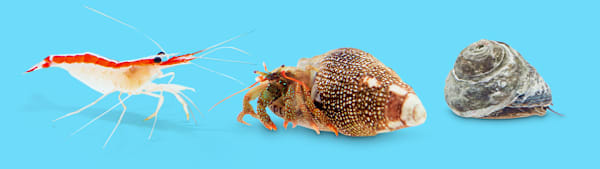
Visit Petco to learn about cleanup crews and how they can help your aquarium health.
Updated on June 19th, 2026
- Care Sheets
Freshwater Semi-Aggressive Fish: Top Secrets for a Thriving Tank
Learn how to care for semi-aggressive fish, recommended diet & aquarium setup. Find the right food, supplies & equipment at your neighborhood Petco.
Updated on April 9th, 2026
 Vet Q & A
What fish tank sizes are included in Petco's $1 per Gallon Sale?
##### What are the dimensions of tanks in the $1 per Gallon Sale? [Here](https://www.petcoach.co/question/?id=411222) are the answers to some of our most frequently asked questions: - What are the dimensions of my new tank? - What kind of hood will fit my new tank? - What kinds of stands will work with my new tank? - What kind of lighting is recommended for my new tank? **Aqueon10G**, **Marineland10G** - Product Dimensions: 20 x10 x12 - Compatible HOODS: Aqueon 20" Deluxe Full Hood - Compatible STANDS: the Brooklyn 10G, Aquatic Fundamentals Silver Vein Scroll 21x11 - Compatible LIGHTING: Aqueon 20" Deluxe Full Hood **Aqueon20 High**, **Marineland20 High** - Product Dimensions: 24x12 x16 - Compatible HOODS: AGA 24"BK VERSATOP GLASS - Compatible STANDS: Newport 20G - Compatible LIGHTING: Aqueon 24" fluorescent strip light or 24" LED light fixture (online only), Fluval Ultra Bright LED Aquarium Strip Light (online only) **Aqueon20 Long**, **Marineland20 Long** - Product Dimentions: 30 x12 x12 - Compatible HOODS: AGA-30"BK VERSATOP - Compatible STANDS: Brooklyn 29G, Winston 29G - Compatible LIGHTING: Aqueon 30" fluorescent strip light or 30" LED light fixture (online only) **Aqueon29G**, **Marineland29G** - Product Dimensions: 30 x12 x18 - Compatible HOODS: 30" BK versatop glass, Aqueon 20" Deluxe Full Hood - Compatible STANDS: Brooklyn 29G, Winston 29G - Compatible LIGHTING: Aqueon 30" fluorescent strip light or 30" LED light fixture (online only) **Aqueon40B**, **Marineland40B** - Product Dimensions: 36 x18x16 - Compatible HOODS: 36X18X16 BLK VRSATOP - Compatible STANDS: Aquatic Fundamentals Upright 50G 37x19 - Compatible LIGHTING: Aqueon 36" fluorescent strip light or 36" LED light fixture (online only) **Aqueon55G**, **Marineland55G** - 48x13x20 - HOODS: 2 of the 24 inch - STANDS: Brooklyn 55G - LIGHTING: Aqueon 48" fluorescent strip light or 48" LED light fixture (online only) *in-store only (We do not ship paned glass)
Updated on September 24th, 2025
 Vet Q & A
What flea, tick, heartworm meds are best for my swimming dog?
Great question! You are correct there are a lot of options out there, and there isn't a treatment that covers all of them. I will give you my opinion on the best medications for many of these things. Because Arthur spends time running in the woods, tick protection is quite important for him, so I recommend giving him NexGard. It protects against three different types of ticks as well as fleas, and because it's a chew, you don't have to worry about it washing off if he gets wet within 24 hours of giving it to him. It's safe to give along with heartworm protection, and for that I recommend giving Arthur Heartgard. It's an excellent heartworm preventative, and when I lived in the US, it's what I used on my dogs (there's no heartworm in New Zealand, so no need for me to use it now). Be sure to have him tested for heartworm first before giving him this medication. The test can be done by your vet. As for worms, I recommend Drontal. It's available by prescription only from the vet, but it kills roundworms, hookworms, whipworms, and tapeworms.
Updated on September 24th, 2025
 Vet Q & A
Why are my fish dying with bleeding, white spots, and polluted water?
I'm sorry you are having difficulties with your aquarium. There are several issues that should be dealt with right now. They are water chemistry, aquarium size and choice/number of fish. Any new aquarium should be set up and, ideally, run empty for several weeks (usually 4-6 weeks). This is so beneficial bacteria have an opportunity to populate the substrate and filter. These bacteria are necessary to break down wastes that fish will produce. The technical phrase for this is "establishing the Nitrogen cycle". These bacteria will break down wastes into ammonia then nitrites then nitrates. Nitrates can then dissipate or be absorbed/used by live plants. In high enough concentrations, ammonia and nitrites are toxic and can kill fish. Cycling a tank with fish is possible but it increases the risk of loss. Water chemistry should be checked every few days using a liquid home test kit. A water sample can be submitted for testing , but is not as convenient as testing yourself. Most pet stores or fish stores will do this for free or for a small fee. Partial water changes, no more than 30%, can be done as needed to stabilize chemistry and maintain water quality. Choices for water conditioners include NovAqua, AmQuel Plus, Prime, StressZyme or StressCoat. Tank size is another concern. With most fish, the widely accepted "one inch of fish per gallon" will be sufficient. For koi and other carp species, including goldfish, the rule is not sufficient. At full size, goldfish need 20 gallons per fish with an additional 10 gallons for each additional fish. Koi do best in larger tanks, much larger...we're talking in the hundreds of gallons or small ponds. These species produce a larger than average bio-load (wastes) that can quickly affect water quality in a tank. To combat this, large water volumes and powerful filtration are required. Any filter should be rated for at least twice the tank volume. I'm not sure what size tank you have now, it may be fine if the fish are young and small, but they will quickly outgrow it. The last issue is choice of fish. Koi and goldfish are cold water fish. They do best in water between 65F and 72F. Most species of sharks do best in the high 70sF to low 80sF. Keeping fish in incorrect water temperatures will lead to stress and illness. This could be compounded by the water quality/chemistry issues you are having currently. Until the chemistry is stable and water quality is maintained, your fish will continue to become ill and possibly die. Any treatment will not be successful in this situation. Do not purchase or add any more fish until the tank has cycled. If you have additional questions, you can post them in the forum or request a consultation to discuss the case in greater depth.
Updated on September 24th, 2025
- Vet Q & A
Why are my angelfish and red tail shark sick in their new tank?
Check the water chemistry and temperature. Use a home test kit or submit a water sample to test fro elevated ammonia or nitrite levels. Most pet stores will do this for free or for a small fee. Partial water changes can be done, if indicated, to stabilize chemistry and improve or maintain water quality. Ideally, you want 0 ppm ammonia and nitrites with nitrates at 20 ppm or less in a non-planted tank or 40 ppm or less in a planted tank. Use only aged or conditioned water that is temperature matched to prevent stress or shock. You'll need to keep the temp at the upper limits for Red Tails in order to keep the Angelfish comfortable. That would be in the 78F to 80 F range. Both have similar pH requirements, 6.8 to 7.5. You can fast the Angel for 2-3 days then feed bits of cooked, shelled green peas. This will usually resolve constipation and bloating. Pristine water quality may resolve the patch on your shark. Recommending a medication without more information or a clear image would be risky to the stability of the tank's nitrogen cycle. You can use plain aquarium salt (NOT table or Epsom salt) as a general tonic. It will reduce stress, improve gill function, may treat minor infection and aid in recovery. Dissolve 1 tablespoon per 5 gallons of water in a cup of tank water and gently pour it into the tank. Treat for 10-14 days then reassess the condition. A note on tank size: Although the two fish may be fine in a 15 gallon tank now, you will likely need a larger tank as they mature. Red Tails can reach 6-7 inches and Angels can reach 6-8 inches. At adult size, a 15 gallon tank will be insufficient and could lead to some aggression from either fish.
Updated on September 24th, 2025
- Vet Q & A
Best tropical fish for a 20-gallon tank? Can I donate fish to Petco?
Platys, Mollies, Neons, Dwarf Gouramis and Cory Cats are all excellent choices. Be sure to not overstock the tank and allow it to properly cycle before adding fish. You would need to contact the Petco in question and ask them directly. Some locations will accept fish to rehome if they have the tank space. Most local fish stores will not, due to risk of disease or parasite transmission.
Updated on September 24th, 2025