Two Easy Ways to Start Earning Rewards!
Earn 2X Pals Rewards points at Petco
when you use Petco Pay!

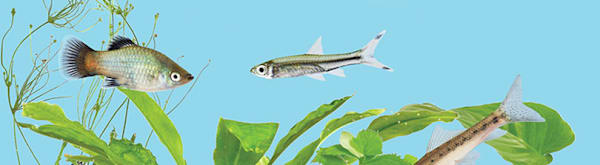
Tanks with live plants can be excellent additions to your home, bringing a touch of nature indoors. Learn how to take care of aquatic plants.
Updated on November 6th, 2025
Wondering why you may need CO2 in your fish aquarium? Learn the basics from a Petco aquatics specialist.
Updated on July 17th, 2026
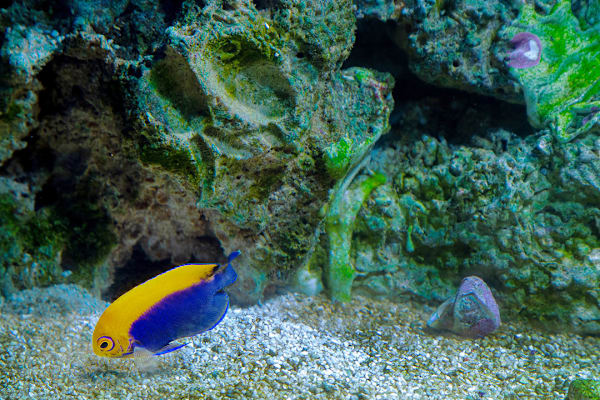
Learn how to care for Marine FOWLR Aquariums. These tanks have easier upkeep and require less testing and supplementation than a reef tank. You can keep many fish who would generally consume corals and invertebrates, making it a popular setup choice for more aggressive fish.
Updated on October 23rd, 2025
Learn how to make a self-sustaining aquarium. Visit Petco to learn all the steps to create the self-sustaining aquarium of your dreams!
Updated on June 19th, 2026
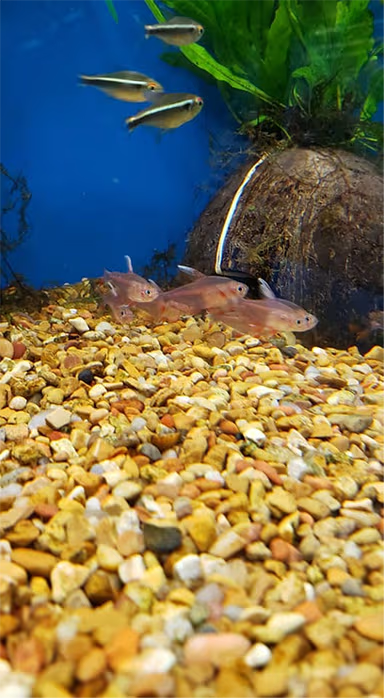
Choosing the right substrate for your aquarium is important and provides an area for beneficial bacteria to grow which keeps your aquatic environment safe.
Updated on June 19th, 2026
Thanks for reaching out about your aquarium. Sorry not very good at botany but there should be tropical fish clubs that might help in identification. But comments about your tank. First, not sure if light penetration will be good for a plant that low in the water column. Secondly, the balanced rock formation looks tenuous, and might fall. Good luck.
Updated on September 24th, 2025
It is possible the tank has not cycled properly which results in high ammonia and nitrite levels which can kill fish. Allow the tank to run, without fish, for at least 4-6 weeks. During this time, use a home test kit or submit a water sample for testing every few days. The local Petco may do this for free or for a small fee. What you are looking for is to have ammonia and nitrites at 0 ppm and nitrates at 20ppm or less. pH can hover around 7 for most community fish. Avoid large, rapid swings in pH though. What is happening in the tank during this time is that beneficial bacteria are populating the gravel/substrate and the filter. These bacterial populations are responsible for the Nitrogen Cycle. This cycle breaks down wastes from fish, uneaten food and plant matter into by-products that are filtered out or dissipate. You can "cycle" a tank with fish, however this increases the risk of loss. Once your tank has cycled, you can add fish. You will still need to monitor water chemistry and perform partial water changes regularly. Use only conditioned water that is temperature matched to prevent stress or shock. You will also need to vacuum the gravel regularly and rinse the filter media. Never use tap water to rinse. Use a bit of tank water to protect bacterial populations in the sponge.
Updated on September 24th, 2025
Java Moss, Java Fern, Anubias and Amazon Swords are among the easiest live plants to care for and cultivate in an aquarium. You can use aquarium soil or aquarium sand depending on the species of plant(s) chosen. When medicating fish, it is best to remove them to a hospital or quarantine tank. This will spare live plants as well as beneficial bacterial populations, especially if an antibiotic is used. Medicated food is also an option.
Updated on September 24th, 2025
The Cowfish, or Longhorned Boxfish, is a marine species that should be kept only by experienced aquarists. When stressed, they can release toxins into the water which may harm tank mates. Pacman frogs, leopard geckos, corn snakes or bearded dragons are all easy to keep.
Updated on September 24th, 2025
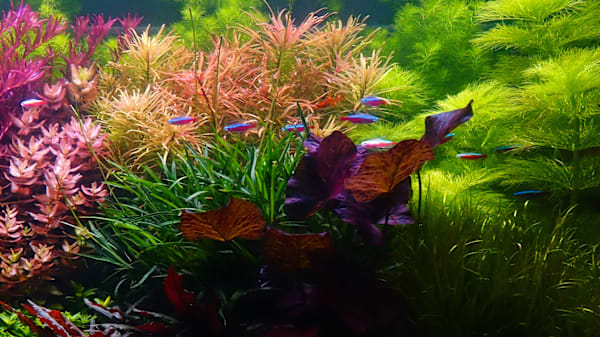
Check the water chemistry. The discoloration could be due to elevated ammonia levels which can cause "burns". Use a home test kit or submit a water sample for testing. The local Petco may do this for free or for a small fee. Aim for an absence (0 ppm) of ammonia and nitrites with nitrates at 20ppm or less. Perform partial water changes to stabilize chemistry and/or to improve water quality. Use only conditioned water that is temperature matched to prevent stress or shock. The Neons (blue fish) appear to be infected with Ich, a parasite. Treatment is possible with commercial products found in the local Petco. Follow label directions carefully. You will need to treat the entire tank until all traces are gone. Removing a lump from your fish on your own is never recommended. You can cause severe injury. Most broad spectrum antibiotics (Kanaplex, Maracyn, Maracyn 2, etc.) found in the aquarium section of the local Petco should help treat or prevent infection. Choose one and follow label directions. Remove the carbon filter insert during treatment if indicated. Maintain pristine water quality via filtration and regular partial water changes to aid in recovery. You can feed frozen worms, just thaw then first in a small cup then place them in the tank.
Updated on September 24th, 2025