Two Easy Ways to Start Earning Rewards!
Earn 2X Pals Rewards points at Petco
when you use Petco Pay!
Get It Today
Learn how to use aquarium salt in freshwater aquariums to promote healthy gill functions, reduce stress, and treat infections in fish.
Updated on July 17th, 2026
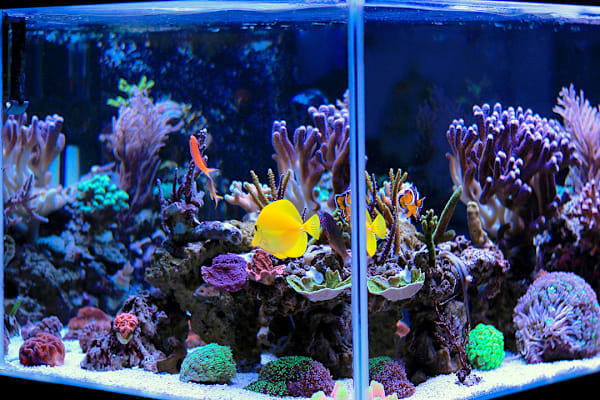
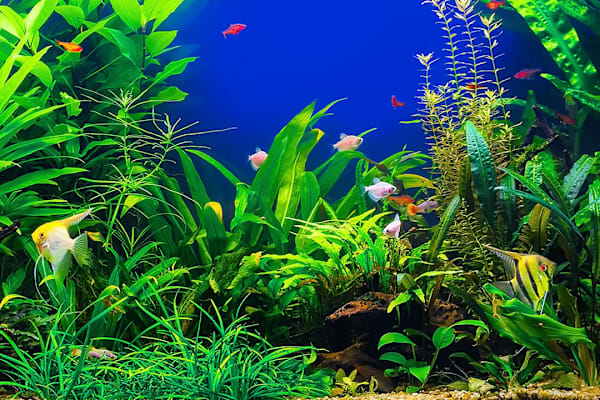
Learn how to set up a saltwater fish tank and key considerations regarding placement, supplies needed, and the overall set up process.
Updated on October 23rd, 2025
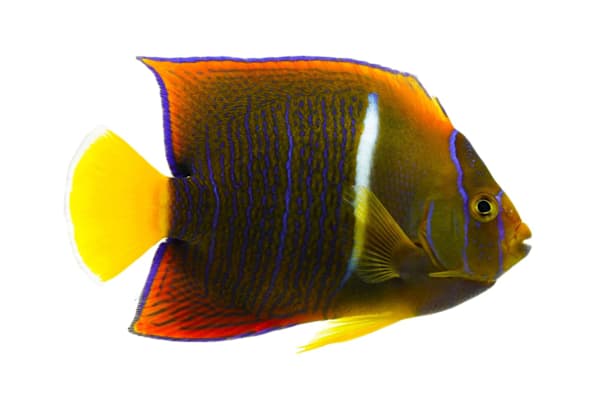
Learn how to care for large marine fish, recommended diet and habitat setup. Find the right food, supplies and equipment at your neighborhood Petco.
Updated on April 9th, 2026
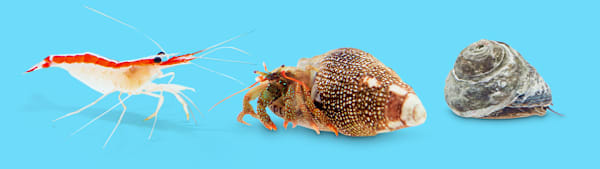
Visit Petco to learn about cleanup crews and how they can help your aquarium health.
Updated on June 19th, 2026
Learn how to safely handle your aquatic life to avoid toxin & bacterial exposure. Find aquatic life care supplies at your neighborhood Petco pet care center.
Updated on October 23rd, 2025
Without anything to use for scale, it is hard for me to tell how big your tank is, but in general it seems very small. Also, the water that is in the tank appears very cloudy right now, so that would be the first place to start. Water quality is very important, and will make or break your ability to house and care for fish. I would recommend getting a good filter system (you can visit a local pet store to assist you with brands in your area, as I am not familiar with what you can get in India). Be sure to bring the measurements (height, length, width) of your tank, or the gallons or liters so they can tell you what capacity of filter you will need. Everything else will depend on what types of fish you get - if you plan on getting multiple fish, they will need to be small - a general rule of thumb is one square inch of fish per gallon of water. Depending on the species you get, you may need to also get a bubbler to ensure there is enough oxygen in the water for them, and you will also likely need to get some sort of substrate for the bottom and cage furniture (different species have different air requirements, and some are secretive and like to hide). You may also need a water heater, depending on the species you would like to house. But, depending on how small your tank is, it may be hard to get a water heater that will fit. The food type will also depend on what species you get, as there can be differences in diet type between species. I hope that gives you a place to start, and good luck!
Updated on September 24th, 2025
Monitor water chemistry using a home test kit or submit a water sample for testing. The local Petco may do this for free or for a small fee. Aim for an absence (0 ppm) of ammonia and nitrites with nitrates at 20ppm or less. Perform partial water changes to stabilize chemistry and/or to improve water quality. Use only conditioned water that is temperature matched to prevent stress or shock. Pristine water quality is the foundation for healing and recovery from infection or injury in fish. You can use plain aquarium salt (NOT table or Epsom salt) as a general tonic to reduce stress, improve gill function and aid in recovery. Dissolve 1 teaspoon of salt per gallon of water in a cup or two of water and gently pour it into the tank. Treat for 14 days then reassess the condition. An "all in one" product, such as Lifeguard (by Tetra), can be used concurrently to treat infection or parasites. Find one in the aquarium section of the local Petco. Follow label directions carefully and remove the carbon filter insert during treatment if indicated.
Updated on September 24th, 2025
Non-iodized salt can be used as an immersion bath (short term) at 10-30 g/L for up to 30 minutes. Keep a close eye on the fish for stress or rapid respiration as some fish can only tolerate the higher dose for minutes. This can be repeated every 2-3 days. It is difficult to determine in the pictures whether this is a parasitic problem or not. Black areas can be the result of melanin pigments, a sign of trauma. A visit to a veterinarian acquainted with fish could perform a skin scrape and examine under the microscope for a diagnosis. Good luck.
Updated on September 24th, 2025
Thanks for reaching out. If is a good idea to fast for 1-2 days prior to shipment, this decreased feces and will help to keep the ammonia down. Typically clear bags are utilized with about 50% water, and 50% air/oxygen used. A local pet store might be able to assist, as they get shipment in (so have older bags and boxes, which need to be disinfected) and hopefully the skills to ship. Check with the airline also, box needs to be well labelled "LIE ANIMALS" and "THIS END UP". Sometimes a health certificate for interstate travel is needed, so contact airline and State of Utah, veterinarian. Good luck.
Updated on September 24th, 2025
Check water chemistry and filtration. Sunny may have developed a bacterial or fungal infection due to the switch in environment. Clean water is crucial to resolving infection. Perform regular partial water changes. Use only aged or conditioned water that is temperature matched to prevent further stress or shock. Maintain water temperature between 75 F and 72 F. Minor infection maybe resolved using plain aquarium salt (NOT table salt). Salt is a great general tonic. It reduces stress, improves gill function and aids in recovery. Dissolve 1 teaspoon of salt per gallon of water in a cup of tank water and gently pour it into the tank. Treat until symptoms resolve. When performing water changes, use just enough salt to treat the water being replaced, not the entire tank volume. If necessary, you can use a broad spectrum medication if symptoms persist. Look in the aquarium section of the local pet or fish store for products such as Kanaplex, Maracyn or Lifeguard by Tetra. Follow label directions carefully and remove the carbon filter insert if indicated.
Updated on September 24th, 2025