Two Easy Ways to Start Earning Rewards!
Earn 2X Pals Rewards points at Petco
when you use Petco Pay!
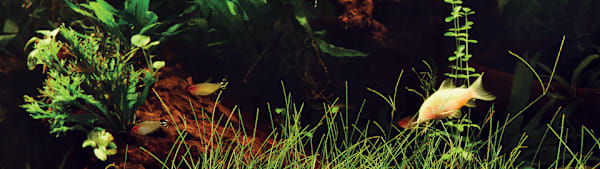
Learn how to pick the right aquarium plants, substrate, lighting, and fertilizers to ensure that your aquarium plants thrive and stay healthy.
Updated on July 17th, 2026
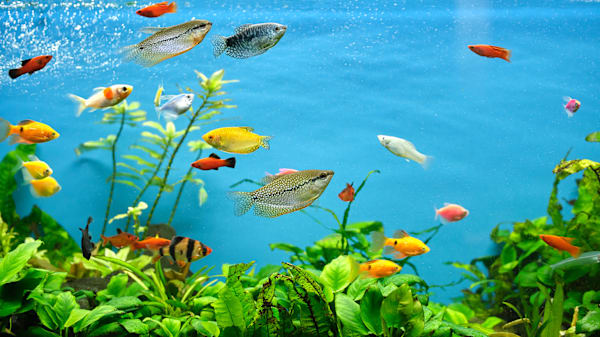
Everything you need to know about how to start a fish tank. Learn about setting up an aquarium, choosing the right type, and acclimating new fish to your tank.
Updated on June 19th, 2026
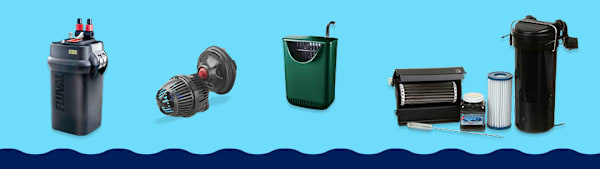
Discover the fish tank filter system that’s right for your aquarium. Learn about mechanical, chemical, and biological filtration at Petco.
Updated on June 19th, 2026
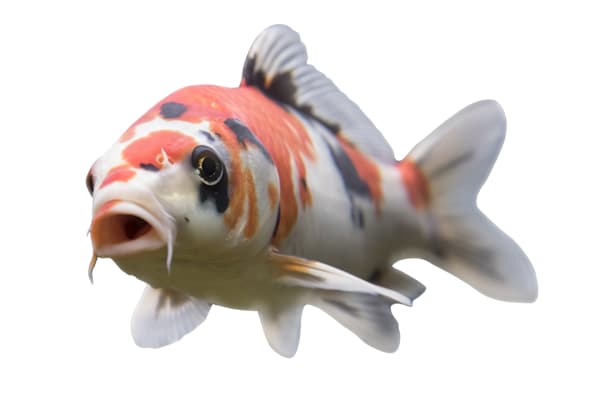
Learn how to care for a Koi, recommended diet and aquarium setup. Find Koi for sale, supplies and equipment at your neighborhood Petco.
Updated on April 9th, 2026
Shop Petco for low-maintenance aquarium decorations like the El Nino fern. We want to help decorate your aquarium to keep your fish happy and comfortable.
Updated on October 23rd, 2025
Check the water quality and temperature. Warm water will not hold as much oxygen as cool water and goldfish are cold water fish. Ideal water temp is about 21 C. Use a home water test kit to check parameters. Ammonia and nitrites should read 0ppm (parts per million) and nitrates can be 40ppm or less. If you don't have a test kit, most pet stores or aquarists will test a sample for free or for a nominal fee. Ensure adequate filtration and oxygenation. Use a filter that will comfortably handle twice the volume of your tank. An airstone will increase oxygenation. A tank hood or cover is recommended to prevent fish from jumping out.
Updated on September 24th, 2025
This could be bacterial or parasitic infection. It is difficult to determine definitively since the image provided is not clear. Fish can be difficult to photograph. Basic care includes checking water quality and chemistry. This can be done using a home test kit or by submitting a water sample for testing. The local Petco may do this for free or for a small fee. There should be an absence of ammonia and nitrites with nitrates at 20-60 ppm. pH should be as close to 7 as possible, avoiding large swings. Koi can tolerate a wide range in temperature, but generally do best between 65 F and 75 F. Again, avoid large swings in temperature to prevent stress or shock. If necessary, a partial water change can be done to stabilize chemistry and/or improve water quality. If you have other koi, consider placing this one in a hospital tank to make treatment easier and to prevent spread if the condition is infectious. Plain aquarium salt (NOT table or Epsom salt) can be used to reduce stress, improve gill function, treat minor infection and aid in recovery. Dissolve 1 tablespoon per 5 gallons of water in a cup or two of tank water and gently pour it into the tank. Treat for 14 days then reassess the condition. If there is no change, consider a broad spectrum antibiotic or "all in one" treatment. Either can be found in the Aquarium section at Petco. Follow label directions carefully and remove the carbon filter insert during treatment if indicated. All that said, if the spots multiply and appear like tiny grains of salt, it could be an ich infection. In this case the entire tank will require treatment. There are several commercial ich medications that can be used. You will also need to thoroughly vacuum the substrate/gravel in the tank and wipe down all tank furniture.
Updated on September 24th, 2025
There are several causes that can provoke these signs fro water imbalances to specific diseases like swim bladder ones. This problem requires a quite radical but logic approach. Begin by submitting a water sample for quality testing. Most pet stores will do this for free or a nominal fee. High ammonia levels, PH imbalances may be responsible for that. Oxygen concentration and quality of the filters should be determined as well. If water quality is good and there are no major imbalances, your fish should get examined to look for any sign of bacterial/fungal infection and eventually water should be treated. Please do not hesitate to contact us again on the forum or by requesting a consultation if you have any more questions or to discuss it any further.
Updated on September 24th, 2025
Depending on the number of fish you get, water quality will be the most important factor in maintaining their health. You'll need quite a large filter for a tank that size. Ideally, choose one that is rated to handle at least twice volume of water in the tank. Mechanical, chemical and biological filtration are all recommended as well as the inclusion of an ultraviolet filter. Silver perch are hardy and can tolerate a wide range of water parameters but thrive at temps between 23 C and 28 C. You may need a heater or heaters capable of maintaining that range. They will spawn anywhere between October and April depending on the age of the fish. Mature fish will spawn early, between October and February, while younger fish will spawn late winter into early Spring. They are an omnivorous species but do well on a commercial pelleted fish chow. One suggestion would be to contact local owners of fish ponds, pond builders and large scale breeders to get more detailed information and to see operations and set up in person.
Updated on September 24th, 2025
Thanks for your question about your fish, and congratulations on your new family members! I didn't see how recently the tank was set up, but there are a couple of things that could be going on. I would start by checking your water quality - any abnormalities in water quality can make fish have abnormal behaviors, and the water looks a bit murky in the photos you provided. There may be parameters that need to be addressed depending on what you find. If you do not have a water quality kit, they can be purchased at the pet store or an aquarium store, or you can take a sample of your water in for evaluation to these places as well. Some will charge a small fee for this service, just so you are prepared. Also, with recent tank set ups, it can be stressful for fish as they are in a new habitat. I would recommend keeping the light on for only a few hours per day to start, as the bright lights can be shocking for them (since fish don't have eyelids). Gradually you can increase the length of time that the lights are on so that you reach a cycle of 10-12 hours of light and 12-14 hours of darkness for them. I hope this gives you a place to start, and I wish you and your mom the best with the new pets!
Updated on September 24th, 2025