Two Easy Ways to Start Earning Rewards!
Become a member today! Members-only pricing and offers, personalized care notifications, Vital Care points back on every purchase and more!
 Become a credit card member today!
Earn 2X Pals Rewards points at Petco
when you use Petco Pay!APPLY NOWLearn More About Petco Pay Benefits
Healthy Aging Dog


Related Articles & Questions
 Health & Wellness
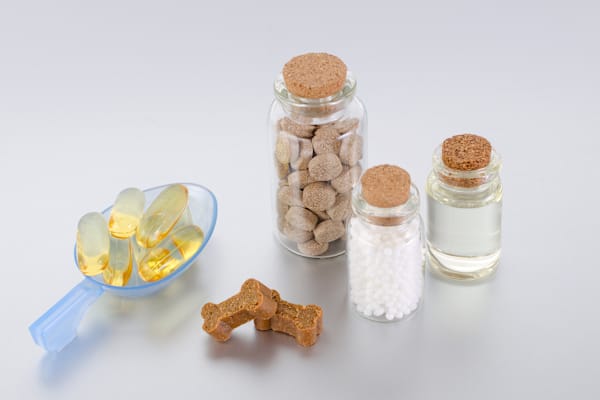
Unlock Optimal Health: Best Pet Supplements for Your Dog & Cat
Discover how to choose the best supplements for your pet’s health, from essential vitamins to joint support and digestion aids. Learn age-specific and seasonal supplement tips for cats and dogs.
Updated on June 19th, 2026
- Health & Wellness
Senior Dog Health Guide: What to Expect and How to Support Them After Age 7
Give your senior dog the best life! Find expert veterinary advice from Petco on caring for older dogs, understanding their health needs, and ensuring their well-being.
Updated on July 16th, 2026
- Health & Wellness
Probiotics for Dogs: Optimize Digestion & Immunity for Health
Learn how to improve your dog's life with nutritional probiotics. Help your dog regardless of age or size & manage inflammation, gastrointestinal health & arthritis.
Updated on June 19th, 2026
- Health & Wellness
Pet Joint Health & Mobility Tips for Dogs and Cats
Help your pet stay active with tips to improve mobility and manage joint health, keeping them moving happily at every stage of life.
Updated on June 19th, 2026
- Health & Wellness
Fish Oil for Dogs: Benefits, Dosage, & Our Top Supplement Picks
Learn about the benefits of fish oil for dogs. Order online from Petco and save with Autoship or Curbside Pickup.
Updated on June 19th, 2026
- Food & Nutrition
What supplements are best for my healthy senior dog's aging?
Hello. Thank you for using PetCoach. Peanut is very handsome! The most common thing that happens as large breed dogs age is arthritis so I would just put him on a good all around supplement that contains joint supplements in it. I love this supplement by Missing Link. http://www.allivet.com/p-1647-missing-link-vet-canine-plus.aspx Some signs he may have arthritis are: * having a hard time getting up from a down position * not jumping up on the couch, bed, etc like he normally does (if he does that) * slowing down on walks (like he doesn't seem like he can go as far as he used to) Even if he is not showing signs of arthritis I would put him on a joint supplement. The other thing I would recommend is yearly blood testing with your vet to check his organ function. Declining organ function is not something you can see from the outside just by looking at your dog. Usually by the time you do see something abnormal it is often too late to do anything about it. It is better to test yearly so you can catch things early. Peanut looks to be in great shape! You are doing a great job! Hope this answers your questions. Please post again if you have more question. Best wishes.
Updated on September 24th, 2025
- Training & Behavior
Best supplements for my senior dog's aging and seasonal itching?
Hello. The best thing to do is start Bella on a good glucosamine supplement. Products made by Nutramax like Cosequin are excellent. A good quality fish oil supplement may be started, too, as this can help some aging changes & may also help with her itching. Do consider one of the Nordic Natural fish oil supplements as they are highly regarded by veterinarians. Thanks for using Petco Pet Education Center, formerly Petcoach.
Updated on September 24th, 2025
- Food & Nutrition
Should my 2-year-old dog take CoQ10 or supplements for healthy aging?
Supplements are usually unnecessary as long as you are feeding a formulated dog food. There are various supplements that have shown mixed results about preventing certain diseases and helping with treatment with certain diseases, but the scientific evidence is not enough (despite a great deal of research with some supplements) for me to recommend an owner to give supplements to a healthy dog. The CoQ10 is a more recently studied supplement that does show promise for certain conditions, but again, the evidence is lacking enough that I wouldn't recommend it be given regularly to prevent certain conditions. The CoQ10 supplements and other ones are usually rather safe though, so I can't say it will hurt to give them. I would recommend consulting with your vet before you do in case Gerald has any conditions that would contraindicate their use and so you can get a precise dose for Gerald. I hope that helps and all is well with Gerald.
Updated on September 24th, 2025
- Health & Wellness
What chicken-free multivitamins for senior dog with DM & allergies?
I'm so sorry to hear that Wesson has degenerative myelopathy (DM). It is a horrible disease that we see far too commonly. There isn't any treatment that is proven to slow the progression of DM other than regular exercise. That being said, there are some recommendations for diet and supplements. The most common protocol that people have used is Dr. Clemmon's DM diet and supplement recommendations. I am attaching a link to his website below. http://dog2doc.com/neuro/DM_Web/DMofGS.htm He recommends a LARGE number of supplements which I think is too much for most dogs and clients to handle, so I will usually try to find a good quality antioxidant and multi-vitamin to add to a homemade diet. I love the company VetriScience. Their product Cell Advance is a wonderful antioxidant. https://www.vetriscience.com/index.php?l=product_detail&p=900722120 Their multivitamins are also wonderful. I usually recommend Canine Plus Senior for older dogs which I do not believe has any chicken ingredients. https://www.vetriscience.com/index.php?l=product_detail&p=9008506060 Good luck! I hope that was helpful. Thanks for using PetCoach.
Updated on September 24th, 2025
- Health & Wellness
What are the best tips for helping my senior dog age gracefully?
We can always help our four-legged friends age as gracefully as possible by staying on top of their wellness care. This includes regular visits to the veterinarian for physical exams and blood tests, as well as staying active and healthy at home. Keep your dog at a healthy body weight. Overweight dogs have additional strain placed on their joints, which can exacerbate existing arthritis, and are at a higher risk for developing diabetes or heart disease. Feed your dog a high quality diet and avoid offering too many treats or table foods since these can quickly pack on the pounds. A general guideline is that treats should represent less than 10% of your dog’s total food volume. Routine veterinary care is also critical for picking up on small problems before they become larger concerns. Although age is not a disease, our aging dogs are more prone to developing a variety of health conditions. Once your dog reaches “senior” status, it is recommended to increase the frequency of visits to the veterinarian from once a year to every 6 months. For an average-sized dog, this happens at 7 years of age, but for giant breeds like Great Danes and Newfoundlands, this occurs early, at 5 – 6 years of age. During this time, your veterinarian will be able to perform a full physical exam and routine blood tests to assess overall health of the heart, liver, kidneys, eyes, mouth, and joints.
Updated on September 24th, 2025