Two Easy Ways to Start Earning Rewards!
Earn 2X Pals Rewards points at Petco
when you use Petco Pay!
Discover how to choose the right dog food based on your dog’s breed and size to support their unique nutritional needs and health.
Updated on October 23rd, 2025
Did you know that what's printed on your dog's food package isn't always straight forward? Learn all the insights behind what's printed on the label.
Updated on November 6th, 2025
Get insights into natural dog food ingredients and learn how they support your pup’s overall health and well-being.
Updated on June 19th, 2026

Give your senior dog the best life! Find expert veterinary advice from Petco on caring for older dogs, understanding their health needs, and ensuring their well-being.
Updated on July 16th, 2026

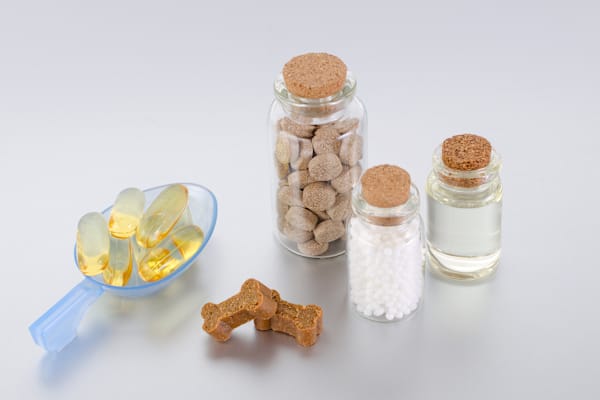
Discover how to choose the best supplements for your pet’s health, from essential vitamins to joint support and digestion aids. Learn age-specific and seasonal supplement tips for cats and dogs.
Updated on June 19th, 2026

I would always feed the food for the specific age bracket and size (adult size ) of the dog, rather than a food "for all". The age-specific food will address the specific needs of your dog at its various life stages and, in my opinion, this serves your dog much better.
Updated on September 24th, 2025

Thank you for using Petco Pet Education Center! In the United States, Pet foods are regulated by a nongovernmental organization called AAFCO. They set standards for what makes a complete pet food. Due to these high standards, most pet foods for sale are adequate to provide complete nutrition for pet dogs. What you want is a food that has an AAFCO statement on the package that the food has been used in FEEDING TRIALS. You will find some food that have a statement that they are FORMULATED to meet requirements. Your family veterinarian may have specific preferences for food types. In general, food made by Hills, Purina, Eukanuba, and Royal Canin will have excellent nutrient profiles for your pet. If your dog has specific medical requirements, your family veterinarian can make recommendations for a prescription food.
Updated on September 24th, 2025

That is certainly a good quality food formulated for "all life stages" and is sufficient to provide all nutrients he needs. Please do not hesitate to contact us again on the forum or by requesting a consultation if you have any more questions or to discuss it any further.
Updated on September 24th, 2025

There are so many high quality foods available for dogs that it can be confusing, and marketing becomes the biggest tool that food companies have to try to give their food the "edge." Be aware that this has led to A LOT of general misinformation. I give you this information openly and honestly as a professional who has devoted the last 10+ years to the health and care of pets. Dogs (and wolves for that matter) are omnivores, meaning they have evolved to seek to eat and digest meat AND plant material. In comparison, cats (and big cats such as lions, etc) are obligate carnivores, meaning they absolutely require meat as their primary food source. While some dogs may have sensitivities to diets with grain, many dogs do not. Just like people. And for those who do NOT have a problem with grains, they are a healthy contribution to the diet. That is just a fact. The trend to favoring "grain -free" diets has been pushed by marketing and the trend of fad diets for people that favor a "paleo" or "keto" diet. Many dog food brands and companies, and many specialty boutique brands have worked to push this idea that grains are bad for all dogs, when the science is just not there. And there has been information linking grain free diets to an increase in heart disease. See this article: http://vetnutrition.tufts.edu/2018/06/a-broken-heart-risk-of-heart-disease-in-boutique-or-grain-free-diets-and-exotic-ingredients/ Here is another great article summarizing how assuming "grain free" is better may be a mistake: http://vetnutrition.tufts.edu/2016/06/grain-free-diets-big-on-marketing-small-on-truth/ Here are some good resources to help you make decisions for Mini''s food. http://dels.nas.edu/resources/static-assets/banr/miscellaneous/dog_nutrition_final_fix.pdf http://www.acvn.org/frequently-asked-questions/ Thanks for asking PetCoach !
Updated on September 24th, 2025

All lifestages pet foods are formulated to meet growth requirements but it may not be as dialed in as a puppy formula. Puppy formula will generally also contain DHA to support brain and nervous system development and this may not be found in an all life stage diet. In general I recommend to feed a puppy formula to all puppies. Best of luck and please feel free to post any additional questions.
Updated on September 24th, 2025