Two Easy Ways to Start Earning Rewards!
Earn 2X Pals Rewards points at Petco
when you use Petco Pay!
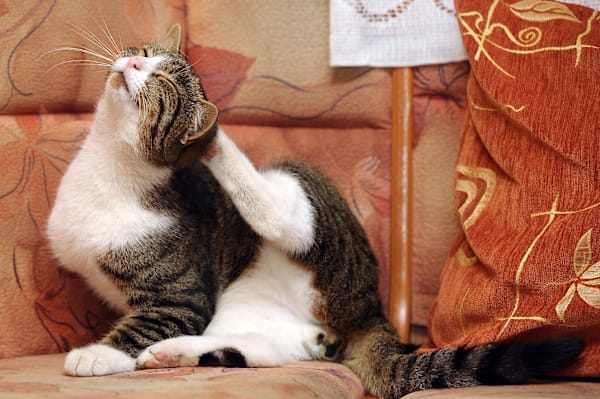
From pollen to catnip, cat allergies can occur with many things you wouldn't suspect. In our guide, we go in-depth about signs of cat allergy, treatment & remedies!
Updated on June 19th, 2026
Explore more about identifying and managing food and skin allergies in cats to help ease itching and other symptoms in your feline friend.
Updated on July 17th, 2026
Because fleas are so problematic, flea prevention is essential! Commonly prescribed preventives include oral and topical medications—although injectable flea prevention is available, as well.
Updated on June 19th, 2026
Is your cat coughing, sneezing or wheezing, and you’re wondering why? Find out the most common causes of cat coughing and the best treatments for your cat.
Updated on June 19th, 2026
Read more about solutions and strategies for people who think they may be allergic to dogs and cats. Find the best solution for your family.
Updated on October 23rd, 2025
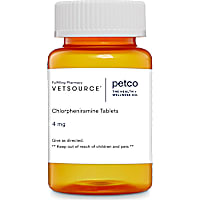
Both of these products contain an antihistamine called chlorphenarimine which does come in feline formulations. There are also several other options for controlling allergies including prescription medications and over the counter medications.
Updated on September 24th, 2025
My first thought is whether Misty has been spayed/ fixed or not as she may be hollering for a mate. If she is spayed, then other sedatives / anxiety medicines may be effective to help curb her night time behavior. I dont have a lot of personal experience using chlorpheniramine in cats, but this class of antihisthamine is relatively safe. The drugs that I may consider dispensing would be gabapentin or amitryptilline. These are both prescription medicines. I have found minimal benefit in herbal remedies in cats - valerian would not be very effective. Royal Canin make a diet called "Calm" which can help with anxiety/ stress behaviors as well.
Updated on September 24th, 2025
It looks like it is unknown if chlorpheniramine is excreted in milk - some antihistamines are while others aren't. All antihistamines may have the potential to decrease milk production so for this reason if the kittens are young it may be best to avoid the medication. If Kiko truly needs the medication you could discuss pros and cons of continuing with your vet - the benefits may outweigh the risks in her situation.
Updated on September 24th, 2025
Chloramphenicol does have some serious side effects in humans, so it is recommend that humans wear gloves when administering the medication to animals. There are lots of other options on antibiotics, but that should be discussed with your vet based on their diagnosis. We can't make specific recommendations on drugs or dosages as it is illegal for us to do so over the internet in the US.
Updated on September 24th, 2025
Benadryl (diphenhydramine) can be used for cats. Other over the counter antihistamines for use in cats include Chlor-Trimeton® (chlorpheneramine), Claritin® (loratadine) and Zyrtec® (cetirizine). You can get doses for any of the above from your veterinarian. Legally, we are prohibited from supplying doses for medications, even OTC meds, in the absence of a physical exam and a VPCR (Veterinarian-Patient-Client Relationship).
Updated on September 24th, 2025