Two Easy Ways to Start Earning Rewards!
Become a member today! Members-only pricing and offers, personalized care notifications, Vital Care points back on every purchase and more!
 Become a credit card member today!
Earn 2X Pals Rewards points at Petco
when you use Petco Pay!APPLY NOWLearn More About Petco Pay Benefits
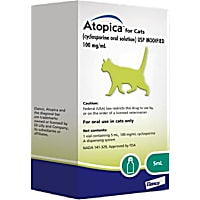
Atopica Prescription Cat Allergy Medicine


Related Searches
Related Articles & Questions
- Health & Wellness
Cat Food Allergies: Symptoms, Causes, Diagnosis, and Treatment
Explore more about identifying and managing food and skin allergies in cats to help ease itching and other symptoms in your feline friend.
Updated on July 17th, 2026
- Health & Wellness
Cat Allergies: Expert Guide to Symptoms, Causes & Effective Treatment
From pollen to catnip, cat allergies can occur with many things you wouldn't suspect. In our guide, we go in-depth about signs of cat allergy, treatment & remedies!
Updated on June 19th, 2026
- Health & Wellness
Itchy Cat? Causes, Relief & Treatments for Feline Skin Issues
Explore common causes of itchy skin in cats and effective treatments to help your feline feel more comfortable and itch-free.
Updated on June 19th, 2026
- Health & Wellness
Pet Allergies: Symptoms, Solutions & Caring for Your Dog or Cat
Read more about solutions and strategies for people who think they may be allergic to dogs and cats. Find the best solution for your family.
Updated on October 23rd, 2025
- Health & Wellness
Fleas in Cats: Is Injectable Flea Prevention Right for Your Cat?
Because fleas are so problematic, flea prevention is essential! Commonly prescribed preventives include oral and topical medications—although injectable flea prevention is available, as well.
Updated on June 19th, 2026
- Medications
My cat has eosinophilic plaque. What meds can my vet prescribe?
Hello, thank you for using Petco Pet Education Center, formerly Petcoach. Steroids generally used are Prednisolone or Depo-Medrol. If Steroids can not control the lesions, we often go to Atopica ( cyclosporine ). For the antibiotic, I would start either with the amoxicillin/clauvalonic acid or one of the cephalosporins ( Covenia if available to you). You might also investigate using a hypoallergenic diet for cats, such as one with a novel protein or one made with a hydrolyzed protein. Science Diet & Royal Canin are very popular ones here. Hope this helps. Take care.
Updated on September 24th, 2025
- Food & Nutrition
My cat has seasonal allergies, scratching & biting. How to help?
Although not the typical affected areas, make sure flea are controlled as this can contribute to ther allergies. A food change may make a bit different as this can be a food allergy. You want to switch to a hypoallergenic diet; royal canin, Purina and science diet all have good diets for this. From there you may need a low dose of cortisone intermittently to help but cats can build a resistance to long term use and have side effects. There is another immunosuppressive drug known as atopica that is helping some cats now. There is another drug called Apoquel that is not labeled for cats but is showing good relief in several
Updated on September 24th, 2025
- Food & Nutrition
My cat has skin allergies. Should I use Prednisolone or Dexamethasone?
Steroids can be indicating is allergic dermatitis but have extreme side effects when used at high doses or long term. I would not recommend this as a long term course. Any steroid over time leads to a resistance where it just won't work anymore and can lead to liver problems and diabetes in cats. Prednisolone is better tolerated and seems to work better in generally in cats compared to dexamethasone. There is a medicine called Atopica or Apoquel that is made for allergic skin disease and does what the steroids do just without the side effects and resistance, so you may be better trying one of those instead. All are prescription medicines so you will have to call your vet to see if they can fill this since they already have a medical report on her. I would stay on the hypoallergenic diet as this can take 2-3 months for max affect and treats count as far as food allergy go, so make sure those are hypoallergenic or don't give any. I would consider a treatment for mange and fleas also. It is not common in cats but causes them to be itchy and it is hard to prove and super easy to just treat to be safe.
Updated on September 24th, 2025
- Training & Behavior
Can I give my cat my Hydroxyzine for his itching and scratching?
Hydroxyzine is not FDA approved for use in veterinary medicine, but it is frequently used "off label" to treat allergies and itching in cats and dogs. Legally, we are prohibited from recommending prescription medications in the absence of a physical exam and a VPCR (veterinarian-patient-client relationship). What you can do, is contact your vet for a dose based on Boba's body weight. Just as in people, antihistamines will affect pets in different ways. You may find it works well, just ok or not at all. Check Boba over for fleas, which are the most common cause of itching and scratching. If found, treat him topically or orally for at least 3 consecutive months but preferably year round. You will also need to treat the environment for fleas. This means vacuuming everywhere and washing all bedding. This should be followed up with a cat safe area treatment to prevent re-infestation. If there are no fleas, you will need to have Boba examined by your veterinarian to diagnose infection (bacterial or fungal), other parasites (mites) or other allergens (food, environmental, inhaled, contact). It can be very frustrating given all the potential causes for allergic reactions. Discuss allergy testing, food elimination trials and hydrolyzed diets with your vet.
Updated on September 24th, 2025
- Food & Nutrition
My cat is scratching, losing fur, red ears. Food or neomycin allergy?
If she responded initially to d/d then this confirmed a significant food sensitivity. A hydrolyzed diet such as royal canin hypoallergenic or anallergenic would be recommended, antiinflammatory medications should also be prescribed to provide short term relief
Updated on September 24th, 2025