Two Easy Ways to Start Earning Rewards!
Earn 2X Pals Rewards points at Petco
when you use Petco Pay!
Stay away from giving your dog human pain medications which are toxic to pets.
Updated on June 19th, 2026
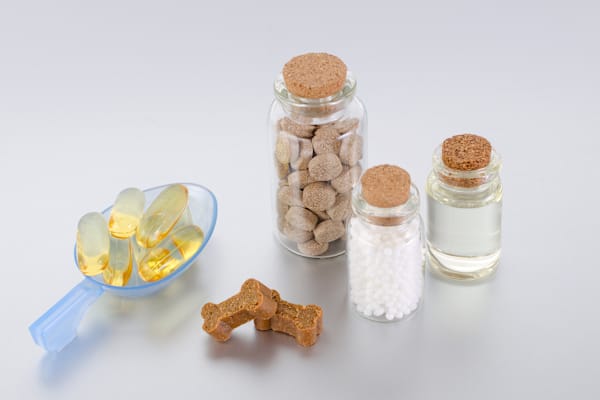
Does your pet have potassium deficiency? Oral potassium supplements for dogs and cats can help you raise potassium levels. Visit Petco to learn more!
Updated on June 19th, 2026

Discover how to choose the best supplements for your pet’s health, from essential vitamins to joint support and digestion aids. Learn age-specific and seasonal supplement tips for cats and dogs.
Updated on June 19th, 2026
Discover how proactive pet care, from regular vet visits to specialized grooming, can support a healthier, happier life for your pet. Learn more about the growing focus on affordable and accessible preventative care at Petco.
Updated on June 19th, 2026
You may have heard that flea and tick prevention are crucial for dogs and cats, but do you know why? Petco is sharing why and how to prioritize pest prevention for your pet.
Updated on June 19th, 2026
Hello. For the most part, veterinary drugs are equivalent to the human version of the same drug & visa versa. If your vet has no objections, he should readily write you a prescription so you can purchase the medication at any pharmacy you wish to use. Just for your information, the product you are displaying is a human medication & not specifically for dogs. Thanks for using Petco Pet Education Center, formerly Petcoach.
Updated on September 24th, 2025
Hi, thanks for using Petco Pet Education Center, formerly Petcoach! The dose of Vetmedin is 0.25mg/kg twice daily. So for a 10 lb dog I would prescribe the 1.25mg tablet to give every 12 hours. I would go to 1/2 of a 1.25 mg twice daily around 6-7 lbs. I hope this helps!
Updated on September 24th, 2025
It appears that nebivolol is being researched for many different possible uses in many lab animal species, but I could not find any information on its use in cats. From the information I could find, most vets have mixed feelings on using atenolol in cats with HCM. There does seem to be a consensus among specialists that it could help in cats with HCM that have Systolic Anterior Motion (SAM) of the mitral valve (seen on echo), but there are no studies showing a positive benefit.
Updated on September 24th, 2025
Unfortunately, we cannot (legally and ethically) advise medication without having an established patient-doctor relationship. It is also dangerous for us to advise medication without examining the animal and fully understanding their condition and medical history. The only place to get a prescription is through a veterinary clinic. However, some vets may be comfortable writing prescriptions for well-established clients that they trust know the conditions they are treating for. This service is strictly for advice only. I hope that helps and all is well with Onna.
Updated on September 24th, 2025
Ventricular fibrillation is the heart issue that you see people on tv getting shocked to try to correct. If not corrected, it results in death within minutes. Ventricular tachycardia and atrial tachycardia are very serious problems. In some dogs it is only transient (meaning only lasting for a few seconds) or it can be chronic. If chronic, it often needs medications to convert back to a normal rhythm or at least decrease the heartrate. In humans, both of these conditions are treated with beta blockers to decrease the heartrate or in the hospital for IV medications and symptomatic treatment. Heart disease that causes these conditions has a poor prognosis for good quality of life for an extended period. There is the possibility that the heart rate is simply high and without an actual arrhythmia. This is common in dogs with heart failure that do not have enough function to pump blood throughout the body. I would need to see the ECG to tell. Through the rest of the weekend, try to limit Bono's activity to keep his blood pressure lower and decrease the strain on his heart. If he will respond to the fortekor, it may take several days. If he is continuing to faint, be listless, not eating, etc. he needs to be re-evaluated by a vet sooner than Monday. He may need additional medications to help with his heart. The use of beta blockers just depends on the actual heart issue going on; they aren't used for every type of tachycardia.
Updated on September 24th, 2025