


Two Easy Ways to Start Earning Rewards!
Become a member today! Members-only pricing and offers, personalized care notifications, Vital Care points back on every purchase and more!
 Become a credit card member today!
Earn 2X Pals Rewards points at Petco
when you use Petco Pay!APPLY NOWLearn More About Petco Pay Benefits
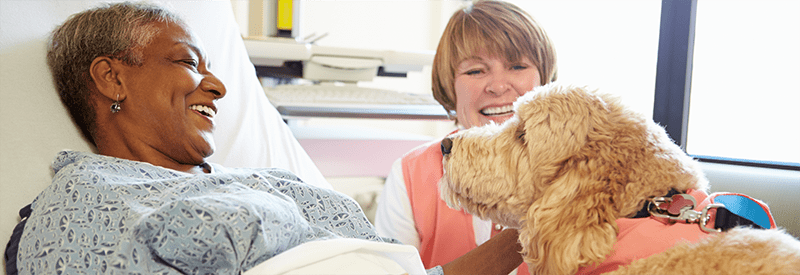
Table of Contents
Would my dog be a good therapy dog?
Training your dog to become a certified therapy dog is a wonderful way to bond and spend quality time together. Therapy dogs are providers of unconditional love and affection.
But first, your dog will need to undergo basic training so that they have the good manners, social skills and exposure to the different types of settings required for this type of volunteer work.
If you’re wondering how to make your dog a therapy dog, the first step is to understand your dog’s temperament and lifestyle. Next, you would need to enroll them in a basic dog training program to establish the fundamentals before starting therapy dog training.
Qualities of a good candidate for therapy dog training:
While every dog is different, there are some qualities that make some dogs great candidates for therapy dog training:
They love people:
They are calm and polite:
They are well-socialized:
They have a great handler:
Your dog loves to meet, greet, and spend time with people, in all types of settings.
Your dog has a calming, gentle demeanor. In many cases, it is a benefit to be a senior dog in therapy training, as older dogs tend to be more mellow.
Your dog is used to all types of interactions. Between receiving hugs from small children and kisses and pets from strangers, your dog is used to all kinds of play and affection.
Being a therapy dog is just as much a job for your pet as it is for you as the pet parent. Great handlers are fair, calm, and receptive to their dog’s needs.
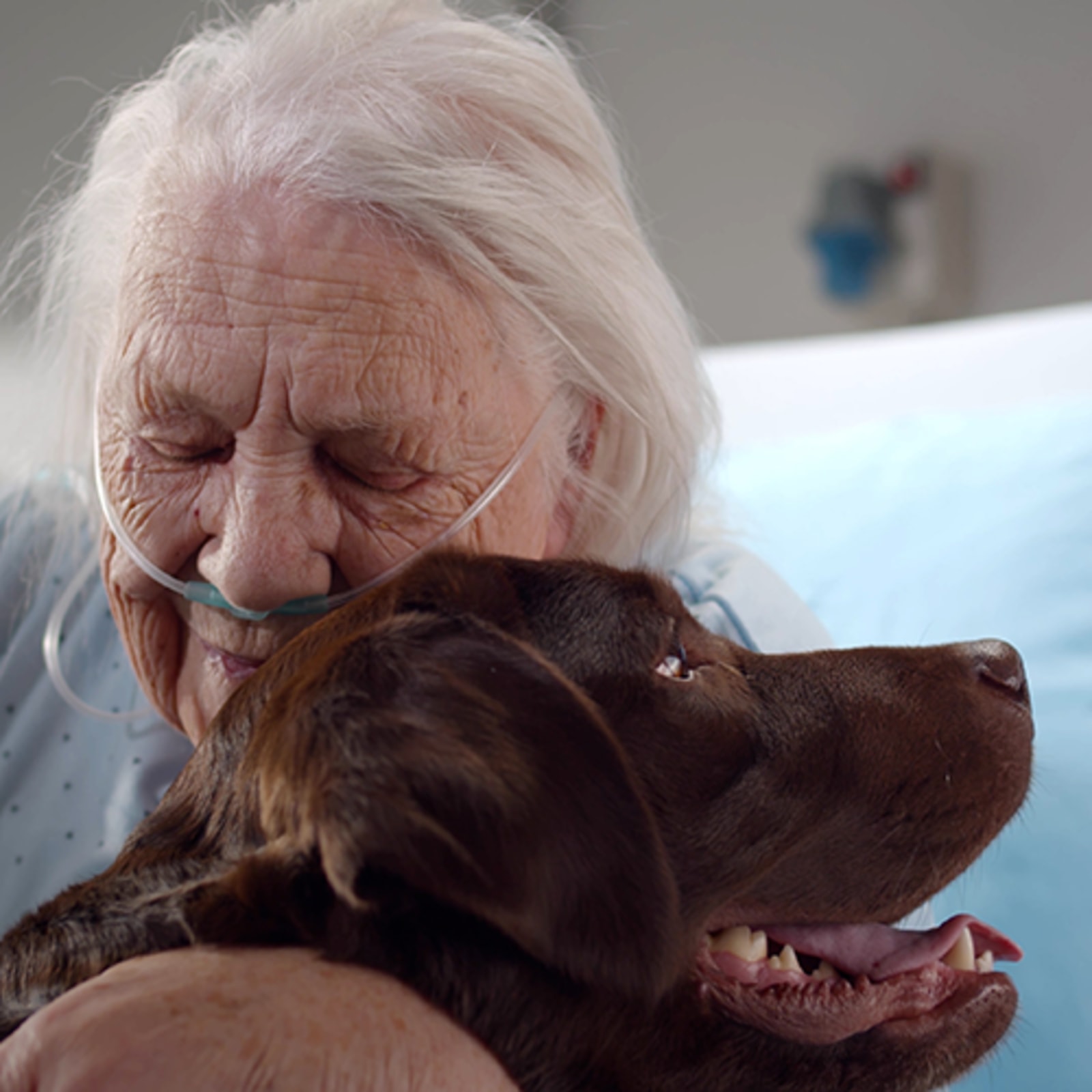
Therapy dogs are different from service dogs. “A service dog is a dog that has been trained to perform specific tasks to assist a person with a disability,” says Dr. Mary R. Burch, a certified applied animal behaviorist and AKC Family Dog director. “A therapy dog is a dog who volunteers with their pet parent to provide comfort and support to people in settings such as schools, hospitals and assisted living facilities.”
Once a therapy dog achieves certification, they may be allowed on airplanes and public transportation. However, check in with transportation officials in advance of traveling to confirm whether a therapy dog can travel.
Therapy dog certification
After achieving a CGC certification, your next step will be to contact an organization to acquire your pet’s pet therapy certification. In some cases, you can apply online. Others require hands-on testing to put your dog through their paces.
“When working towards therapy dog certifications it’s important to research the certifying organization and learn what requirements and prerequisites are in place,” says Cooper. “There’s a solid foundation of training needed prior to applying.”
Some of the foundational behaviors your dog will be observed for are cues that Petco’s training program can help with, and may include:
- How your dog reacts around other dogs
- How well your dog listens to you
- If your dog allows strangers to touch and handle them
- If your dog avoids jumping on people when interacting
- If your dog walks on a leash without pulling
- If your dog tolerates strange noises and smells
- If your dog is calm during petting
- If your dog is okay with people walking unsteadily
To maintain therapy dog certification, your pet needs to be current on all vaccinations that are required by local laws and have a negative fecal test every 12 months. Therapy dogs should always be clean and well-groomed, too.
How to work toward therapy dog certification in 3 steps
1. Ensure you have a strong training foundation
At Petco, we can get your therapy dog training started by laying the foundation. Sign up for dog training classes today.
2. Practice training in different areas and buildings
Once your dog achieves therapy dog certification, you can put your dog’s training and special skills to work in different settings such as schools, hospitals, airports, conferences and disaster-relief areas.
Therapy dogs are also sometimes used in courtrooms to help children open up, says Burch. “Children who have been abused or witnessed a crime are often afraid to talk to adults,” she says. “However, they will talk to a patient therapy dog so that officers of the court can hear their stories.”
3. Register your pet with a dog therapy organization
Pet therapy groups and organizations will pair you up with the right facilities and volunteer organizations. Volunteers are covered by the organization’s liability insurance. It’s not advisable to work independently without such coverage.
Pet therapy is rewarding volunteer work for all humans involved, but it offers great payback for your pet, too. Pets receive mental and physical stimulation while helping others. It’s a win-win.